March 30, 2023

Theodorus Steib (born 1627)

– A disabled artist and his self-determined life –

The Object

We [the authors] discovered this miniature self-portrait of Theodorus Steib. It is not just a testament to his painting skills, but also to how he saw himself. His painting skills were truly amazing, and he also managed to capture his experiences as a disabled person in seventeenth-century Austria and Germany. 

Self-portrait of Thodorus Steib. Oil on oak wood, dated 1651. Photo: K.-K., Rhineland-Palatinate, image courtesy of the owners.
Self-portrait of Thodorus Steib. Oil on oak wood, dated 1651.
Photo: K.-K., Rhineland-Palatinate, image courtesy of the owners.

The picture shows him deep in concentration, sitting on a red cushion on the floor. His gaze is fixed on his feet. As he was born without hands or arms, his feet allowed him to live a self-determined life. 

He is shown surrounded by the tools of his trade. Beside him there is an inkwell, an ink blotter, and two quills. By his other side there is a stack of paper with scissors, a drinking vessel, a can and a cut-out object. All these things are expressions of his independence, which show in his professional actions. 

The text in the lower section of the picture was written by himself. He described how, when and where he painted the painting. 

The content of this contribution is based on extensive research,  including contact with different museums, historians and experts. These people enthusiastically helped us and spared no effort in providing us with information from archives and old documents. 

This unique and unusual survivor from a bygone era quickly attracted interest. Its existence was unknown for centuries and now that it has been rediscovered, it should be as widely known as possible. It can be viewed on the city website of Rothenburg ob der Tauber. You can also find an article about it here.

Our reasons

The reason for this contribution is a miniature painting, which we bought after discovering it by chance due to our connections in the art world. At first there was no obvious clue which let us know the hidden story this painting tells. After a lot of research many small pieces of information formed a picture of a remarkable and unique life of a person with a disability.

Who was Theodorus Steib? 

Theodorus Steib was born in Vienna, during the Thirty Years War (1618-1648). Even as a small child, he was determined to be as independent as possible. Despite social barriers, he painstakingly learned how to use his feet for painting, whittling, cutting paper and cocking and shooting a gun. He also wrote poems and rhymes, mostly about himself.

Historical background

The Thirty Years War was one of the most destructive conflicts in European history and caused widespread hardship. For Theodorus Steib, who was 22 when it ended, his disabilities made things even harder. At the time, disabled babies rarely survived.

At that time, disabled people were often ignored and cast out of society - exhibited at fairs for the amusement of onlookers, or kept as jesters for entertainment at court. Theodorus Steib, however, gained respect and recognition for his abilities. With a cart and three servants, he travelled around the country, bringing his artistic skills to the people. 

All this gave him astonishing confidence and the financial means to make a living for his family, his three servants and himself. With persistence, hard work, much courage, and endurance he refined his art. He demonstrated his talents publicly, writing poems or little letters in the presence of viewers. Selling these enabled him to become financially independent and later to support his family.

His journey

The fact that he is preserved in records is testament to the importance that people attached to him.

When he was 24 he travelled from Regensburg to Rothenburg ob der Tauber, where he stayed for a couple of weeks and took part in the Christmas Market as an artist. 

He was a visitors’ magnet. There he also penned rhymes and little letters, cut figures with scissors and painted others and himself. 

A year later he moved to Nuremberg. Whilst there he painted paintings and penned little letters, to the delight of paying audiences. His financial livelihood was secured. 

In July 1657 he married his wife Martha in the Scots Church in Vienna. One year later, his daughter Maria Catharina was born. Two years later his son Georg was born. In the year 1663 he travelled with his family back to the renowned spa town of Baden in Switzerland. Shortly after that Theodorus sadly died. His son Georg followed him a few weeks later.


Addition of 16 August 2023:

The miniature panel painting by Theodorus Steib has been officially and permanently included in the list of "nationally valuable cultural assets" by the Commission for the Protection of Cultural Property in Germany.

___________

About the authors:

Retired married couple.
Centre of life: Rhineland-Palatinate
Interested in ancient artwork. 
Hobby: Exploration of histories.


Recommended citation:

Karla-Kreitz (2023): Theodorus Steib (born 1627). In: Public Disability History 8 (2023) 1.

December 23, 2022

"An Additional Claim": Amputee officers in Nelson's Navy

By Teresa Michals

A victorious career fighting the French at sea as a Royal Navy officer during the Revolutionary and Napoleonic Wars required a lot: highly specialized seamanship skills, charismatic leadership, absolute indifference to death or injury, well-placed and active patrons, and luck. What it did not require was two arms or two legs.

From 1795 to 1837 at least twenty-six officers survived amputation of limbs damaged in battle and continued in active service, including command at sea. They continued to capture, sink, or burn enemy ships. Six returned to fight without a leg; twenty without an arm (Michals, Lame Captains and Left-Handed Admirals: Amputee Officers in Nelson’s Navy. All statistics and quotations from this source.). All these officers were gentlemen and thus well-positioned within patronage networks.  The support offered by their elite social and professional status shaped their experience of limb loss in their day, as did the fact that this loss was not congenital but rather incurred in defense of their country. Today, their distinctive experience shows how socially- constructed disability may be separated from the effects of physical impairment itself.

Admiral Lord Horatio Nelson is the most famous by far of these active-duty amputee officers. He lost his right arm in a relatively unimportant fight years before he won the historic engagements that earned him his place on top of an enormously tall column in central London: the Nile (1798), Copenhagen (1801), and Trafalgar (1805). There is only one Horatio Nelson.  But as a successful active-duty amputee officer, he was in good company.


Nelson's Column in Trafalgar Square, London, erected 1843.
Figure 1 - Nelson's Column in Trafalgar Square, London, erected 1843. Credit: https://creativecommons.org/licenses/by-sa/3.0>, via Wikimedia Commons.

The careers of these amputee officers draw attention not only to their particular talents, but also to an institutional culture that allowed their country to take advantage of them. The Royal Navy of the time has an entirely deserved reputation as a ruthless fighting machine. The fact that this ruthless fighting machine needed and valued amputee officers should make us question ableist assumptions about who is fit to serve, and in what capacity.

Promotion: "An Additional Claim"

We might assume today that only a wartime scarcity of officers made such careers possible. However, the opposite is true. Amputee officers won the privilege of continued command despite fierce competition, not because of a lack of candidates. Although the Navy of their day was chronically short of seamen, it was oversupplied with officers. There were far too many talented and ambitious officers begging for the privilege of command, and far too few ships to accommodate all those whose patrons bombarded the Admiralty with letters pressing their cases.

Such letters portray an amputee officer’s limb loss as “an additional claim” to the privilege of command. For example, on April 13, 1809, Captain Duncan of the Mercury stressed this point when writing to the father of his First Lieutenant, Watkin Owen Pell, after a successful action: “His having before lost a Leg in the service will give him an additional claim & I have no doubt the Lords of the Admiralty will take into consideration his sufferings & reward his Gallant services.” Pell was promoted to the rank of Commander on March 29, 1810, won further battles at sea, advanced to post-rank on November 1, 1813, and eventually reached the rank of admiral.

Limb loss, then, was a distinction that moved an amputee towards the front of the host of officers hoping to go back to sea, rather than sending him to the back of the queue. Losing an arm or leg under the specific circumstance of a successful battle could be an advantage in the competition for promotion, It formed part of a career path that was unusual, but not unique to the larger-than-life figure of Nelson.

In fact, in Nelson’s Navy, the meaning of “able-bodied” was itself different than what we might assume today. It referred to a certain set of skills, not a certain kind of body. Every man who signed on to a ship’s books was given a rating based on his experience. Those new to the sea were called Landsmen, those with limited experience were Ordinary Seamen, and those with at least two years at sea, and specialized skills gained through this experience, were rated Able Seamen or Able-Bodied Seamen, often abbreviated to A.B. Based on skills not bodies, a person with limb loss could be deemed “able bodied.”

Self-Presentation: "See, Here Is My Fin!”

There was also a performative element to how these amputee officers managed other people’s perception of their bodies. People who live with a visible physical difference today often describe the additional everyday task of assuring potentially skeptical onlookers that they are competent rather than conforming to stereotypes of disability.

By their continued careers as national heroes who commanded men, ships, and a great number of large guns after limb loss, these amputee officers disrupted stereotypes of their day that linked physical difference to pity and charity, or to the monstrous and evil. The fact that they were officers also meant these men were very good at being looked at. Part of the job of any successful fighting officer was to stand bolt upright and project confidence in the heat of battle.

There are many well-documented examples of Nelson incorporating his impairment into his public image. On one memorable occasion, when challenged by a ship in the Baltic in 1801, he threw back his boat-cloak and declared “I am Lord Nelson. See, here’s my fin!”

Admiral Sir Michael Seymour was one of Nelson’s fellow amputee officers, although he is not widely known today. He had lost an arm in battle, but also carried his displays of competence into civilian life. He had a wife who was “devoted to her garden” and, at home, he often “could be seen on top of a ladder, pruning a vine or restraining a vigorous creeper, to the wonder of his younger children, who marveled that one who had but a single arm could attempt such work and indeed, he surprised many by what that on hand and arm could accomplish.” In addition to surprising onlookers by accomplishing tasks such as pruning, dealing cards, and carving roasts one-handed, Seymour and his good friend Admiral Sir James Alexander Gordon gave a kind of public performance of mock-pity. Gordon had lost a leg in battle early in his distinguished career. Seymour’s biography includes an anecdote in which Seymour and Gordon carry on a “humorous dispute” before an audience of their friends “as to which was the better off, he who had lost an arm or he who had lost a leg, each maintaining his own loss to be the lightest.”

Portraiture: Looking Like a Hero

We also can see deliberate self-presentation in these officers’ portraits. Eighteenth-century painter Sir Joshua Reynolds’s enormously influential Discourses on Art (1769-1790) requires the artist to make a hero look like a hero: “a painter of history shows the man by showing his action…He cannot make his hero talk like a great man; he must make him look like one.” For Reynolds, only a certain kind of body can make human greatness visible. A hero must not be “lame or low”: “Alexander is said to have been of a low stature: a painter ought not so to represent him. Agesilaus [a king of the ancient Greek state of Sparta] was low, lame, and of a mean appearance. None of these defects ought to appear in a piece of which he is the hero.”

In keeping with these principles, an officer’s loss of an arm was not usually represented as part of his heroic image. Rather, the portraitist more often resorted to the “discreet three-quarters view,” as in Sir Peter Lely’s dual portrait of Sir Frescheville Holles and Sir Robert Holmes. Holles brandishes a sword at the viewer, standing at an angle that conceals the fact that his other arm was lost in battle.


Peter Lely and Sir Frescheville Holles
Figure 2 - Peter Lely and Sir Frescheville Holles. Credit: National Maritime Museum, Greenwich, London.


This all changed with the growing fame of Horatio Nelson. Nelson was the subject of more formal portraits than any military hero except the Duke of Wellington, and he presented the viewer with a full-frontal view of an amputee.  Lemuel Francis Abbott’s much-reproduced 1797 portrait of Nelson foregrounds the empty right sleeve of Nelson’s Royal Navy rear admiral’s uniform, neatly secured across his chest, the cuff angled up to point towards the gold star of the Order of the Bath:


Lemuel Francis Abbott, Horatio Nelson (1797)
Figure 3 - Lemuel Francis Abbott, Horatio Nelson (1797). Credit: National Maritime Museum, Greenwich, London.

Nelson’s celebrity status seems to have popularized this pose for officers who had lost an arm. Michael Seymour is among those who chose to be represented in this way. Here is an engraving of James Northcote’s portrait of Seymour:


James Northcote (engraved by James Cook), Michael Seymou
Figure 4 -James Northcote (engraved by James Cook), Michael Seymour.  Credit: National Portrait Gallery.


Nelson’s popular image as an amputee admiral remained constant even as memories of wartime service faded and Victorian ideas about disability grew more popular. However, the image of other amputee officers shifted, leaving Nelson to stand alone.  For example, a later engraving alters Northcote’s portrait of Michael Seymour: it draws in the left wrist and hand that Seymour lost in battle.


Admiral Sir Michael Seymour, wrist restored.
Figure 5 - Admiral Sir Michael Seymour, wrist restored. Credit: National Maritime Museum, Greenwich, London. 


By recovering the careers of these amputee officers as a group, I do not mean to suggest that the Navy of their day was a utopian space for physical difference in general. I do mean to suggest, however, that for men in a certain social and institutional position, certain kinds of physical difference were an everyday part of professional life at a time when we might assume otherwise.


Teresa Michals is an Associate Professor at George Mason University. Her publications include Books for Children, Books for Adults: Age and the Novel from Defoe to James (Cambridge, 2014) and Lame Captains and Left-Handed Admirals: Amputee Officers in Nelson's Navy (University of Virginia Press, 2021). She studies the history of disability, children's literature, and 18th and 19th-century British novels.
_____________________

Recommended citation:
Michals. Teresa (2022): "An Additional Claim": Amputee officers in Nelson's Navy. In: Public Disability History 7 (2022) 5.
 

November 29, 2022

"The past is valid only in relation to whether the present recognizes it"

By Emmeline Burdett


This quotation comes from Beethoven Was One-Sixteenth Black, one of the short-stories in a collection by the white South African writer Nadine Gordimer, which was published in 2007. It demonstrates how differing interpretations of the past can easily become a politicized battleground. A new chamber opera which looks at disability history through a highly politicized lens demonstrates both the pitfalls and the possibilities of this approach.  The Paradis Files was created by Graeae Theatre Company and tells the story of Maria Theresia von Paradis (1759-1824), an Austrian composer and pianist who went blind at around the age of three, and who wrote at least five operas, two cantatas, fifteen keyboard works, several songs and a piano trio. Graeae was founded in 1980 by the disabled actor Nabil Shaban, specifically to counter prejudices and popular myths about disabled people. It was named after the Graeae of Greek mythology - three sisters named Deino (dread), Enyo (horror), and Pemphredo (alarm) who shared an eye and a tooth between them.


https//www.greekmythology.com/Myths/Monsters/Graeae/Graeae.html”>Graeae: GreekMythology.com - May 16, 2022
Figure 1 - The three sisters Graeae with one eye and one tooth. Credit: https//www.greekmythology.com/Myths/Monsters/Graeae/Graeae.html”>Graeae:
GreekMythology.com</a> - May 16, 2022.

According to its website,

Graeae is a force for change in world-class theatre, boldly placing Deaf and disabled actors centre stage and challenging preconceptions.


A series of unfortunate events


Much of Paradis’s music has been lost, and her best-known piece, the Sicilienne, may in fact have been composed by the violinist Samuel Dushkin (1891-1976). The reason why so many of Paradis’s works have been lost seems to be that, in common with other female composers, particularly in the past, many of her performances took place in the domestic sphere, and as such her music may not have been extensively printed and republished. This dearth of material may be partly responsible for the fact that Paradis is most well-known today not for her musical abilities, but for the attempts that were made to ‘cure’ her, and for her relationship with the German physician and pioneer of the theory of animal magnetism, Franz Anton Mesmer (1734-1815) by whom she was treated between late 1776 and the middle of 1777. Mesmer’s treatment of Paradis was the least brutal of all those to which she was subjected, and Mesmer is the only physician with whom Paradis built up a relationship. Enduring speculation about the nature of the relationship between Paradis and Mesmer has been the focus of interest for other creative depictions of Paradis’s life story – in recent years there have been three novels, one of which has been the inspiration for a film, as well as a short story and a play. Like The Paradis Files, none of these are historical documents, but they are important, because they tell us which aspects of the past people feel are important to emphasise. In this way they can be seen as what the academic Susanne Knittel calls ‘sites of memory’(Knittel 2015: 7). Knittel writes that 
I conceive of a site of memory as encompassing not only the specific geographic location of a historical event but also the assemblage of cultural artifacts that accumulate around it over time (ibid.).


Of course, Paradis was not a historical event, but she was a historical figure. Knittel continues: 
Literature plays a particularly important role in this dynamic process as a singularly self-reflexive medium of memory that foregrounds questions of representation and respresentability (ibid.).

So, in Knittel’s view, literature in its various forms is a particularly powerful way of addressing the meaning of things that happened in the past, and, by extension, the meaning the lives of people who lived in the past. It seems that most mainstream portrayals of Paradis portray her through the prism of her relationship with Mesmer. In addition, such portrayals seem to have an enduring fascination with how Paradis did things as a blind person. For example, the French author Michèle Halberstadt’s novel about Paradis and her relationship with Mesmer  – entitled The Pianist in the Dark – won the Drouot literary prize in 2008 and was shortlisted for another – the Lilas.  The Drouot prize was founded in 2007 by the Drouot auction house and Le Magazine Littéraire to honour the best French fiction writing about the arts.  So, why was it so well received, and what does its reception tell us about mainstream perceptions of Paradis’s story? And how does this relate to Susanne Knittel’s idea of ‘sites of memory’?
The way that Paradis’s story has been told in mainstream creative representations of it is something that Graeae wanted to address in The Paradis Files and doing so chimes with both Graeae’s vision of placing Deaf and disabled people centre stage, and Susanne Knittel’s concept of ‘sites of memory’. Knittel says that this idea is particularly applicable to minority history, because of the challenge it presents to mainstream ideas of what the past was like. According to Knittel, minority memories 
Must constantly assert themselves in the face of the dominant memory culture, particularly when the latter becomes politicized and instrumentalised in the interest of hegemony (ibid.).

I would argue that much of what we have seen in recent months or years involves the politicization of minority history, and that part of equality involves accepting both that one may be wrong even if one is from a minority group, and that one cannot argue that one’s attempt to distort the past does not matter because people like oneself have historically been discriminated against. Nevertheless, Knittel is correct that minority views of the past are significantly more vulnerable than majority ones. For example, reviews of The Pianist in the Dark frequently praised the way Halberstadt portrayed blindness (Williams 2011: unpaged), and this leads to the question of whether the fact that the novel won the 2008 Drouot literary prize can in some ways be compared to the truism that a non-disabled actor or actress who plays a disabled character is virtually guaranteed an Oscar for doing so, while disabled actors and actresses themselves often face avoidable barriers. 
These are the problems that The Paradis Files seeks to address. In agreement with its ethos, it seeks to put Paradis (rather than Mesmer) at the centre of the story. In addition, it rejects the idea that the ‘cures’ to which Paradis was subjected were benign – it could be argued that mainstream portrayals support this idea by concentrating on Paradis’s treatment by Mesmer and glossing over her treatment by other physicians.  


Cutting, bleeding, heating and freezing!

In The Paradis Files, The Gossips tell the audience that the ‘cures’ to which Paradis was subjected involved ‘cutting, bleeding, heating and freezing’.  Mesmer makes no appearance, and instead, three other physicians feature. As in Resistance, Liz Crow’s art installation about the Nazi ‘euthanasia’ programme, the physicians are unnamed in the programme, which seems to underline the point that this is not their story, and not a story in which their treatment of Paradis will be portrayed as having been in any way well-intentioned. However, an article in the British newspaper The Guardian reveals that these include Dr Joseph Barth (1745-1818) the holder of the first European Chair of Ophthalmology at the Medical University of Vienna, a position to which he was appointed by the Austrian empress Maria Theresa, after whom Maria Theresia von Paradis was named, and to whom her father was Imperial Secretary. The Paradis Files portrays Barth as sticking pins in Paradis’s eyes. The difficulty of finding out whether there is any basis for this claim is compounded by the difficulty of obtaining detailed information about Barth’s techniques, save that he designed the original ‘Beer’s Knife’, which was modified and popularised by his student Georg Joseph Beer. This knife was used for cutting out cataracts.
Though this is something of a grey area, the idea that doctors have always been inherently sadistic towards disabled people is extremely important to the Anglo-US disability movement. In his book By Trust Betrayed: Patients, Physicians, and the License to Kill in the Third Reich, Hugh Gregory Gallagher discusses what he says is the nature of the relationship between a physician and his or her chronic patients: 

The psychological relationship between a physician and his chronic patients is a difficult one…Medicine is a science, and…both doctor and patient must believe in the power of the doctor. The chronic patient challenges this belief (Gallagher 1990: 199).

According to Gallagher, the chronic patient’s failure to respond to treatment leads to frustration on the part of the physician, who then takes revenge for this challenge to his omnipotence by devising sadistic ‘cures’: 
At the end of the nineteenth century, the fledgling specialty of orthopaedic medicine was unable to do much to relieve its paralysed and deformed patients. …It prescribed an array of bizarre braces, casts, and confining devices, hideous and tortuous, with which to torment what it could not cure (ibid.).

The difficulty with this reasoning is that Gallagher’s book is about the Nazi ‘euthanasia’ programme – the systematic murder of institutionalised patients in Germany between 1933 and 1945. Gallagher also writes: 
The Germans are not ‘different’ from the Americans in any critical sense … How they treated their insane, handicapped and retarded during the Third Reich was certainly extreme behavior – tragic and appalling – but it was not inconsistent with patterns of social behavior that can be traced throughout the history of the disabled throughout the centuries. The German physicians actually acted on the basis of feelings which are common, to a greater or lesser degree, to most men and women in most societies (ibid: 24).

Though this interpretation means that the Nazi ‘euthanasia’ programme is not seen as having taken place outside of history, it can also suggest that there is no real difference between things that happen, and that the only important thing is that they happen to members of the same minority group. For example, one point that The Paradis Files labours very heavily indeed is that Paradis’s unsuccessful medical treatment is exactly like things which have happened to members of Graeae: 
I also remember you bringing in ping pong balls and various sharp things … demonstrating the scenes of torture she [Paradis] had to go through…It is an all too familiar narrative with disabled people, the need to ‘fix’ us. I was sent away to be ‘cured’ but I was completely okay with being Deaf (ibid.).

The question of whether there are parallels between modern attempts to ‘cure’ disabled people, and the ethos of the Enlightenment period in which Paradis lived is an important one but insisting that there are direct parallels ignores various points about Paradis’ life and situation. For example, Paradis’ position at court meant that restoring her sight would have been seen as much more of a coup than restoring the sight of a ‘nobody’, and her position allowed her to receive a comprehensive musical education. This meant that she did not have to worry about the necessities of life and was able to become a musician in the first place. Her achievements would have been much more unlikely if she had been of humbler origins. One way that activists have sought to evade this problem is by regarding such things as differing time periods as inconsequential window-dressing which obscures moral issues. For example, a review of Nabil Shaban’s play The First to Go, about the Nazi ‘euthanasia’ programme, suggested that the play’s 1940s setting made its desire to consider contemporary moral questions relating to disability more difficult because 
A modern-day audience can easily distance itself from the events of the Second World War and deny any responsibility.

One imagines that, without the claim that there are parallels between Maria Theresia von Paradis’ sufferings and contemporary efforts to ‘cure’ disability being relentlessly hammered home, a similar problem might exist regarding The Paradis Files. Nevertheless, the way Paradis’ individual story is ignored in favour of making a socio-political point is problematic – it suggests that disabled people have not existed over time.  Appearing to be interested in Paradis only insofar as her situation allows one to talk about one’s own creates the impression that, in Graeae’s view, disabled people are entirely interchangeable, even when they live hundreds of years apart and in completely different societies. In a sense The Paradis Files isn’t even Paradis’s story, but one in which Graeae metaphorically stand in front of her shouting ‘Me! Me! Me!’ and feel that they are entitled to do so. 
The hijacking of Paradis’ story for socio-political ends is also evident in the simplistic way that The Paradis Files’ co-librettist, Selina Mills, insists that Paradis has been ‘forgotten’. In some ways this is true – Paradis is hardly a household name, and the way she did things as a blind person has had to be rediscovered, rather than being known. This does suggest that Paradis has been seen only as an exceptional individual, rather than as a comprehensive challenge to the idea that one must be sighted to compose. Nevertheless, in addition, to all the creative depictions of Paradis’s life, there is a street in Vienna named after her, and the wrongly attributed Sicilienne was played at the 2018 wedding of Prince Harry and Meghan Markle. None of these things suggest very convincingly that Paradis has been forgotten. Instead, perhaps, what has happened is that she is improperly remembered. This is something that Graeae’s approach is unable to challenge, as, in agreement with its philosophy, it refuses to make any real acknowledgement that most people aren’t blind. This is particularly problematic because it cannot tackle stereotypes – most notably those which prevent Paradis being adequately appreciated. Tackling stereotypes was one reason why Graeae was founded.

Tackling Stereotypes


One of the most enduring stereotypes about disabled people is that that, without non-disabled people to help them, they would be unable to achieve anything. Paradis’s Wikipedia entry describes how others invented things for her but is completely silent on the things that she invented for herself. These inventions included different-shaped playing cards so she could participate at card-tables, tactile maps of the cities she toured in, and a system of knotted cords which she used when performing to enable her to recall changes of key and tempo (The Paradis Files 5: The Forgotten Enchantress). It is noteworthy that this information makes no appearance in the opera itself. Of course, if Paradis had not been a person of note she would not have had a Wikipedia entry, but the problem of everything which allowed Paradis to achieve her potential being attributed to somebody else is something which I also found when trying to research the disabled German seamstress Margarete Steiff. Paradis’s Wikipedia entry also records that she ‘assisted’ Valentin Haüy in founding a school for blind children, which opened in 1785. In fact, she showed him the tactile alphabet she had developed herself.
No information about this appears in The Paradis Files itself (although it is in the programme) but by taking this approach, Graeae leaves itself unable to tackle the perception that Paradis’s achievements were possible solely because of the involvement of other people. Trying to solve problems of historical inequality by pretending that the person who has been treated unequally was the same as everyone else also makes it impossible to evaluate different types of inequality. For example, the director of the 2017 film Mlle Paradis, Barbara Albert, made the point that Paradis’ friend Maria Anna (‘Nannerl’) Mozart was as talented as her famous brother Wolfgang Amadeus, but she still had to give up her career when she married, meaning that, in a sense, Paradis’ own career was only possible because she was considered ‘unmarriageable’.


The present as a substitute for the past


When I went to see The Paradis Files, there were many more obviously disabled people than one would see in the audience of a typical production, and there could have been several reasons for this. Firstly, people might simply have been interested to learn about the life of a historical disabled person. Secondly, they might have been keen to support Graeae, which is well-known and well-respected amongst politically active disabled people and those involved with disability arts. Thirdly, they might have known members of Graeae’s cast and crew personally. Fourthly, they might themselves be involved with Graeae, either now or in the past. Lastly, the Southbank Centre, where The Paradis Files was shown, makes a particular effort to embrace ‘diversity’. The production presented a past that would be recognised as ‘relevant’ by its audience because it would support their own experiences and view of the world.  This is most obvious in terms of Paradis’ unsuccessful medical treatment and the way in which The Paradis Files praises Paradis’ decision to give it up in preference for remaining blind. I showed above how important the idea of doctors’ persistently malign attitude towards disabled people is to the disability rights movement, and this is carried through into The Paradis Files. The scene in which pins are stuck in Paradis’s eyes is the most distressing in the whole opera. It seems to have been included to create a sense of Paradis as a member of a persecuted minority, but to what extent does it reflect the lived experiences of actual disabled people?
Graeae produced several films exploring aspects of The Paradis Files, and in one of these Bethan Langford, the visually impaired mezzo-soprano who plays Paradis related how, when she was a child, it was decided (although not by her) that she had to wear an eye-patch for a period. Long after it had been taken off, she continued to experience extreme anger, a psychological reaction to being treated unfairly and feeling powerless to do anything about it. Though this will be familiar to a lot of people, it is disabled people who are told that whatever is happening is ‘for their own good’. The assumption that those who are treating them are acting out of benevolence, or that because it is a ‘natural’ reaction to an impairment, the disabled person has no right to complain and is not a reliable witness anyway, all conspire to make it hard for disabled people to be taken seriously. In The Paradis Files, by contrast, when another of the physicians is ‘treating’ Paradis, the Gossips sing  
This man should be in prison (ibid.).
It’s certainly a radically different way of looking at history. 

The Paradis Files’ penchant for asking ‘timeless’ questions designed principally to appeal to its modern audience is also evident in the opera’s other main storyline, that of the relationship between Paradis and her mother, Hilde. Very little is known about Paradis’s actual mother, and the perceived timelessness of the questions involved was addressed in the opera’s programme in a discussion between Graeae’s Artistic Director Jenny Sealey and the librettist of The Paradis Files, Nicola Werenowska: 
The other thing we all loved was the mother-daughter relationship…Throughout history and still today, women are ‘blamed’ for having a disabled child…Hilde was desperately trying to navigate the world for Theresia, to protect her, but she failed her in many ways (The Paradis Files 3: In Conversation).

There are various ways in which this portrayal of familial conflict might speak to Graeae’s intended audience. For example, embracing the social model of disability might be incomprehensible to parents who believe that a disabled person should fade into the background, or if this is not possible, should uncomplainingly abandon attempts to participate in society, and instead tolerate endless, pointless ‘pity’. Such differing reactions would inevitably cause conflict, resentment, and possibly, estrangement.


But was the past really just like the present, and do the same questions arise? The Paradis Files was certainly made with the present in mind, and its attitude is summed up by something that happens near the beginning of the opera. We are told that ‘The doorbell goes’. Given that Paradis died in 1824 and the doorbell was not invented until 1831, this seems unlikely. This might seem like a pedantic quibble, were it not for the implications for both disability history, and for the history of any minority group. Getting such elementary things wrong because, apparently, you cannot be bothered to get them right, seems lazy and amateurish. As such, it does not suggest that disability history is something that needs to be taken seriously by the majority. It also gives no sense of people from a minority group existing over time. In my view, what is needed is to reintegrate Paradis into a collective past, and part of this requires an appreciation that she lived in a society in which the doorbell did not exist. Concepts of what disability is and what it means likewise change over time – for example, in many societies, a woman’s inability to give birth – either at all or to a male heir for her husband – is considered to be a disability. If we go back to the example of Bethan Langford and the eyepatch, maybe one way forward is to separate the wearing of the eyepatch from Langford’s feelings about it – we don’t know why she had to wear it, and there may have been a perfectly legitimate reason for her doing so. However, the way it was foisted on her ‘for her own good’ may not have been so legitimate.

Dr Emmeline Burdett is an independent researcher.

_____________________

References:

Miller, B. R. (2014) History of the blind. Britannica. unpaged.

Gallagher, H. G. (1990) By Trust Betrayed: Patients, Physicians, and the License to Kill in the Third Reich. New York: Henry Holt and Company. 

Heisel, W. (2020) Time for Hollywood to make disabilities more than just Oscar material. Center for Health Journalism. 

Jeffries, S. (2022) ‘People were always trying to fix her’: the ‘blind enchantress’ who wowed Mozart. The Guardian. unpaged.

Knittel, S. C. (2015) The Historical Uncanny: Disability, Ethnicity, and the Politics of Holocaust Memory. New York: Fordham University Press. 

Mills, S. (2020) The forgotten female composer fêted by Mozart and Haydn. The Spectator. unpaged.

Shechet Epstein, S. (2019) Mesmer and Mlle Paradis. Sloan Science and Film. 

Softely, R. (2008) Review of Nabil Shaban, The First to Go. Disability Arts Online.

The Paradis Files, programme.  pp. 3-5.

Williams, H. (2011) Review of Michèle Halberstadt, The Pianist in the Dark. The Historical Novel Review. 58. unpaged.


Recommended citation:
Burdett. Emmeline (2022): Disability and video game culture. In: Public Disability History 7 (2022) 4.

May 2, 2022

Disability stories from skeletons

By Stephanie Evelyn-Wright

In June 2014, I attended a performance of ‘Cabinet of Curiosities: how disability was kept in a box’. This show explored the ways in which disability and disabled people are portrayed in museums (School of Museum Studies 2022).  However, the skeletons of actual disabled people were omitted.  I asked the show’s performer – the disabled actor Mat Fraser – about this, and he told me that he was interested in disability as a social construct, but not as a ‘medical condition’. Fraser’s attitude is an example of the social model of disability, which holds that it is not a disabled person’s medical condition which causes problems, but the failure of the society in which that person lives to accommodate him or her. This is, however, an unhelpfully narrow view, for skeletons are continually shaped by the world - for instance a person’s diet and occupation can leave osteological traces which attests to their lived social world.

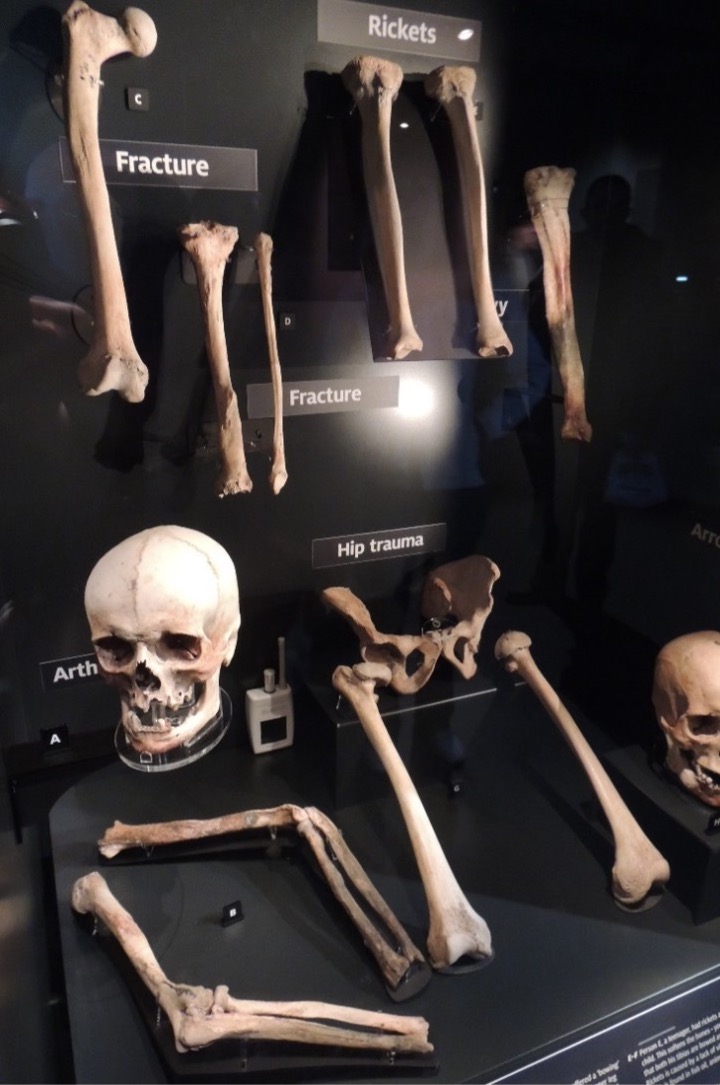
Disabled people’s remains are frequently selected for display in museums in the UK and beyond, and how they are displayed says a lot about how disability is perceived.  For example, the photograph below shows a glass cabinet from the Mary Rose Museum, Portsmouth. The cabinet contains pathological specimens found in the skeletal assemblages from the wreck of the Mary Rose, King Henry VIII’s flagship which sank in 1545, and was raised from the seabed in 1982. As the photograph below shows, the bones are not placed in the context of the overall skeleton, with the result that the individuals are literally reduced to their impairments. An aim of my research therefore is to change the stories that are told about disability with skeletons.


Figure 1 - A display of pathological skeletal specimens from the Mary Rose, Portsmouth. Credit: S Evelyn-Wright (2014)


I started with the Romans, as my background is Roman archaeology. The Roman world has a martial and ruthless reputation, and one that is arguably merited. The highly efficient military machine that led the building of an Empire rarely surpassed in all human history dominates people’s perceptions of Ancient Rome and seems to leave little room for people with different bodies. It is therefore presumed that the lives of people with disabilities in the ancient world lived up to the oft quoted adage of ‘nasty, brutish and short’.

Archaeological studies into disability in the Roman past seem to also reflect this negative perception, with the topic of infanticide being the focus of research. Infanticide (the act of killing an infant under the age of one year) is thought to define ancient relationships with disability. Infanticide was legal in the Roman Empire up until 374CE but the extent to which it was practiced is highly debatable. For example, there are some groups within the Roman Empire who completely rejected the practice, such as Jewish groups and people from Germany and Egypt (Laes 2008).

There are many osteoarchaeological papers about infanticide in Roman Britain (a few examples include Gowland et al. 2014; Hassan et al. 2014; Mays and Eyers 2011; Taylor 2015). But infanticide nevertheless represents only a small minority of disability experience, and a preoccupation with it means that people born with impairments not apparent at birth or acquired later in life are inevitably overlooked. We will probably never know the number of infants who fell victim to infanticide, but we can say with certainty that not all did. The following is an example.


Figure 2 - Skeleton AA766 laid out to study. Credit: S Evelyn-Wright (2016)
Figure 2 - Skeleton AA766 laid out to study. Credit: S Evelyn-Wright (2016) 


Finding a Middle Way

AA766 is the skeleton of a young female who died aged between 18-20.  Her remains were excavated from the late Roman cemetery site of Alington Avenue, Dorset. AA766 had stopped growing at time of death and has the estimated stature of 1.23m (c. 4ft). Her short stature is the result of a condition called Langer type mesomelia, a form of disproportionate dwarfism that impacts the length of the shin and forearm bones more than the thigh and upper arm limbs (Langer 1967). This information alone is not enough to determine disability. The experience of an impairment needs to be contextualised within the individual’s body, life, community, and environment. To understand AA766’s context, and therefore any disability, different datasets from osteoarchaeology, archaeology, history, interviews and medicine need to be integrated together. This proved a challenge.


The Use of Fictive Narrative

An answer to this challenge was a fictive narrative. Inspired particularly by the work of Alexis Boutin (2012), fictive writing provided an opportunity to explore the experiential aspects of impairments. Fictive writing, however, also has the potential to render research more accessible to a wider audience. It is particularly apposite for the study of disability - a discipline embroiled in a long fight for improved accessibility. Below is an excerpt from a fictive narrative written as a result of the data collected from the site of Alington Avenue. The roman numerals in the brackets of the text below are numbers for the associated footnotes which provide the evidence underpinning the story. 


I wish they would slow down a bit. Even as the solemn procession carefully picks its way across the increasingly uneven ground of the necropolis, I still feel like I’m trotting to keep up. I have to jump out of the way of a swinging elbow, a persistent hazard when you are this height (i). Being invisible to people however is preferable to their stares. Strangers unashamedly scrutinise my small stature, my large hands, my strange gait, my prominent backside, whispering behind their hands (ii). I feel self-conscious, but I act defiant. I once heard a stranger in the market say that they would have exposed me at birth if they had had a child like me. ‘What kind of future could she possibly have? Who will marry her? (iii)’ I struggled to hold back tears until I returned home. My mother had found me weeping in a corner. She told me that in Rome, rich, famous men, like the first emperor Augustus, had paid a lot of money to have someone like me in their household (iv). I don’t know if this is true, but it comforts me.


(i)   The narrator of this story is AA766 discussed earlier and the story is set in the context of the Alington Avenue cemetery itself, as this is the one context we know the individual had a connection with. AA766 was noticeably shorter than her burial community - the average stature for biological females in the Alington Avenue skeletal assemblage was 1.60m height (AA766 was 37cm shorter than average). I interviewed an individual of similar stature to AA766, for insights into the lived experience of being of shorter stature than is the norm for one’s society, and my interviewee described similar incidences of having difficulty keeping up with the walking pace of friends and accidentally being hit by unobservant passers-by (Evelyn-Wright forthcoming).


(ii)   Staring is a common, albeit unwanted, experience of people with visible impairments. AA766’s description of herself relates to the evidence of the skeleton. Her hands would appear large in comparison to the size of her forearms. Her prominent backside is the result of evident lumbar hyperlordosis in the lower spine, which results in a protruding bottom (Evelyn-Wright forthcoming).


(iii)   Marriage has been identified as the key rite of passage for Roman women (Allason-Jones 2005). At age of death, AA766 would have quite young to be married, the youngest known bride from Roman Britain being 19 (Allason-Jones 2005), however it would be part of her near future if following the expected life course trajectory. AA766’s reference to ‘exposure’ refers to the practice of abandoning infants shortly after birth. Like infanticide, exposure is known to have happened in the Roman world, but it is not known to what extent this occurred (Southwell-Wright 2014). Exposure however formed part of the founding myth of Rome (the twins Romulus and Remus were suckled by a she-wolf after being exposed), so we can presume that the theme was at least known about. Langer type mesomelic dwarfism is visible from birth and so AA766 did survive any selection process there may have been with her evident impairment (Evelyn-Wright forthcoming).


(iv)   This refers to the known phenomenon that people with visible impairments, including dwarfism, were high-status slaves to ancient Roman elites (Garland 2010).


I hope that this short piece has shown that, contrary to Mat Fraser’s opinion, skeletal data can be used to talk about disability in a socio-historical, rather than just a medical, context. The fictive narrative writing style allowed me to use insights gained from interview to enhance our understanding of the osteoarchaeological data. The narratives link the experiences of disabled people living in ancient societies with those living today. All this would be difficult to achieve in a strictly academic write up. I also hope that such a writing style catches the reader’s imagination and communicates information in an accessible way.

I must acknowledge Dr Sonia Zakrzewski, my PhD supervisor and the SWW DTP for their support. Thank you to Dorset County Museum for allowing access to their skeletal collections. I also must acknowledge my interviewee JL. Thank you for sharing your experiences, I hope I did them justice.


Stephanie Evelyn-Wright has recently completed her doctorate at the University of Southampton in Roman osteoarchaeology.

_____________________


References: 


Allason-Jones, L. (2005) Women in Roman Britain. York: Council for British Archaeology.


Boutin, A. T. (2012) Written in Stone, Written in Bone: The osteobiography of a Bronze Age Craftsman from Alalakh. In: Stodder, A. L. W. and Palkovich, A. M. eds. Bioarchaeological Interpretations of the Human Past: Local, Regional and Global: Bioarchaeology of Individuals. Gainsville, Fl.: University Press of Florida. pp. 193-214.


Evelyn-Wright, S. S. (forthcoming) Dis/ability stories from Roman Dorset: an integrated osteobiography approach. PhD thesis, University of Southampton.


Garland, R. (2010) The eye of the beholder: deformity and disability in the Graeco-Roman world. 2nd edition. London: Bristol Classical Press.


Gowland, R., Chamberlain, A. and Redfern R. C. (2014) On the brink of being: re-evaluating infanticide and infant burial in Roman Britain. Journal of Roman archaeology supplementary series. 96. pp. 69-88.


Hassan, N.A.M., Brown, K.A., Eyers, J., Brown, T.A. and Mays, S. (2014) Ancient DNA study of the remains of putative infanticide victims from the Yewden Roman villa site at Hambleden, England. Journal of Archaeological Science. 43. pp. 192-197.


Laes, C. (2008) Learning from silence: disabled children in Roman antiquity. Arctos. 42. pp. 85-122.


Langer, L. (1967) Mesomelic dwarfism of the hypoplastic ulna, fibula, mandible type. Radiology. 89. 4. pp. 654-660.


Mays, S. and Eyers, J. (2011) Perinatal infant death at the Roman villa site at Hambleden, Buckinghamshire, England. Journal of Archaeological Science. 38. 8. pp. 1931-1938.


School of Museum Studies (2022) Mat Fraser Cabinet Of Curiosities.


SocAntiquaries (2021) SAL Evening Lecture: Writing dis/ability stories from skeletons.


Southwell-Wright, W. (2014) Perceptions of infant disability in Roman Britain. Journal of Roman Archaeology supplementary series 96. pp. 111-130. 


Taylor, K.N. (2015) The improbable occurrence of infanticide at the Yewden Villa, Hambleden, England. PhD thesis, Texas Tech University.


Recommended citation: 


Stephanie Evelyn-Wright (2022): Disability stories from skeletons. In: Public Disability History 7 (2022) 3.


February 19, 2022

Disability and video game culture

By Sebastian Barsch & Joana Hansen

In May 2020, the announcement that a wheelchair-bound character would soon be included in the video game "Marvel's Avengers" went viral. In a way this is surprising because for various media there has been discussion for years about how to better represent social diversity. Even if these discussions have not led to people with disabilities being adequately represented in films, for example. What must be questioned, however, is which actors are chosen to portray people with disabilities. Sophia Stewart aptly writes: "The Oscars Love Movies About Disability, Not Disabled Actors".

Video games have a similar impact on society as movies. They are now produced at similar expense, the computer game industry is extremely financially strong, and it can be assumed that computer game aesthetics have an enormous influence on the perception of many people. At a first glance, however, it seems that computer games depending on the genre are a last stronghold of "ableism". Action games in particular emphasize the value of the "healthy" body. Deviations from the "norm" are often portrayed not simply as weakness. No, rather they can lead to limiting the success of the game. The perfect or even the perfected body is idealized as the maximum positive.

History seems to be particularly exciting for computer games. Not only scenarios around World War II dominate the computer game market. The Middle Ages, antiquity and numerous "hybrid forms" in which historical events are mixed with mythological narratives are popular game settings as well (see Angela Schwarz 2012 (in German language)). Increasingly, scholars are also investigating the extent to which history in computer games can be understood as part of a remembrance culture (Nolden 2019). History is always culturally embedded. From a historiographical perspective, therefore, it is not only the reconstruction of the past that is interesting. Rather, the way societies deal with the past is also a worthwhile object of research. In German-language discourse, the term "historical culture" has become established. This term refers to the way societies consciously (for example through holidays) or unconsciously (for example in aesthetic products) deal with the past (Rüsen 1994; Schönemann 2014). In computer games, both are combined: the conscious knowledge of the past that the developers refer to. Conscious aesthetic norms that shape the look and feel of the game are also taken into account. Beyond that, however, unconscious images about history also influence the games. It can therefore also be assumed that stereotypical ideas about "dis/ability" influence the conception of video games. So, let's take a closer look at some of the games.

Disabilities as algorithms in Crusader Kings II

As an example, take Crusader Kings II, a grand-strategy game by Paradox Interactive first published in 2012. As the name suggest, the game is set in the Middle Ages but was never limited to the time of the crusades. You can pick your starting point from a huge variety of regions, from the kingdom of Wessex to Nubia to Tibet at several points in time between 769 to 1337 A.D. Basically, the goal of the game is to keep going, to build a dynasty, since if your character dies, you’re continuing with the heir/heiress, usually a relative. But there are many other ambitions to pursuit, “grooming an heir” is just one. The interesting part is how randomized features come into play: choosing a “character focus” and a goal changes what kind of events happen throughout the game. Also, all kinds of features and characteristics are quantified, so is the player’s character’s “health” which will be influenced by the player’s choices.

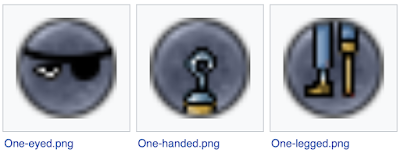
For example, choosing a focus on “Family” increases your character’s fertility by 25% and comes with a health bonus. Choosing “War” as a focus raises the personal combat skill but gives you a higher chance to be challenged to a duel, which is always a risk, since losing the duel could also result in being heavily wounded or even losing a limb. There are various ways to become disabled, but there are also genetic traits that can affect the character or their offspring, like being “clubfooted”, a “dwarf”, a “hunchback” or “imbecile”, just to name a few. They all affect your health negatively throughout the game by decreasing your overall health score, your personal combat skill, your fertility, your attraction and even the opinion your vassals have of you as in how much they like you. Besides having an eye-patch, none of these disabilities are visible on the character, only the trait-icons tell you about the disabilities and what effects they have.

Icons in Crusader Kings II showing disabilities
Icons in Crusader Kings II

In order to succeed players naturally look for the best stats possible by e.g., marrying a genius spouse or acquiring new skills or – getting rid of the potentially disadvantaged heir. Depending on the chosen region and time the dynasty does not always build on primogeniture and you can also try to change succession-law. Or you can ask for more or less cruel advice in the Paradox’s forums like one player did. In other forums, too, physicality and Ableism are usually discussed in a (negatively) judgmental way by players:


The simplification of history and the responsibilities of videogame developers

CK II is a hugely complex game and not every way of how health can be influenced could be considered here, however the representation of disabilities is questionable the least. As all other characteristics, disabilities are represented as numbers that effect the algorithms of the game. While the game tries to build some parts of the settings on seemingly historical conditions (for example the power structures in the region of your choice), other parts like being disabled are not reflected historically. Historical games, especially in the strategy game genre, are notorious for simplifying complex processes and realities to algorithms with specific functions in the gameplay. However, unlike in other games, where developers progressed to include more female characters, more People of colour, and more diverse gender identities and sexualities, how disabilities and disabled characters are depicted here doesn’t make them more visible per se, they become more of an obstacle in the game that players either try to “get rid of” or “balance out” with other stats.

Furthermore, this attitude towards disabilities and their visibility hasn’t changed with the release of its successor, Crusader Kings III, as Nicolas Huss has pointed out in his review (in German language). But as mentioned above, these images matter, as they proceed to stick in people’s heads and perpetuate narratives. Since disabled characters in media are often made less likeable or are villainized even anyway, game studios need to be reminded that these depictions perpetuate ableist attitudes, as it happened with one of the enemies in Assassin’s Creed Valhalla developed by Ubisoft. Video game producers have a responsibility, just like other actors in culture.

Sebastian Barsch is professor of history didactics at Kiel University. Joana Hansen is a doctoral candidate in medieval studies at Kiel University.

______________________

References of printed literature

  • Nolden, Nico: Geschichte und Erinnerung in Computerspielen: Erinnerungskulturelle Wissenssysteme. Boston 2019.
  • Rüsen, Jörn: Was ist Geschichtskultur? Überlegungen zu einer neuen Art, über Geschichte nachzudenken. In: Jörn Rüsen, Theo Grütter, Klaus Füßmann (Ed.): Historische Faszination. Geschichtskultur heute. Köln 1994, 3–26.
  • Schönemann, Bernd: Geschichtsdidaktik, Geschichtskultur, Geschichtswissenschaft. In: Günther-Arndt, Hilke/ Zülsdorf-Kersting, Meik (Hrsg.): Geschichts-Didaktik. Berlin (6th ed.) 2014, 11–23.

Recommended citation:
Barsch, Sebastian/ Hansen, Joana (2022): Disability and video game culture. In: Public Disability History 7 (2022) 2.