As Douglas Baynton pointed out, once you begin to ‘see’ disability, it is everywhere.1 I never had to look too far. I do not possess particularlly lucid memories of my childhood. What I do remember is my childhood was punctuated and subsequently disjointed by the ebb and flow of epilepsy (‘apasmaaram’ in my language, Malayalam); as is often typical for the ‘unhealthily disabled’.2 At the age of 11, I had my first, dramatic seizure. I don't recall much about the event, just brief flashes of pain, panic and confusion. Over the next seven years, I only had ten or so seizures and my epilepsy eventually responded to a cocktail of medications. While cushioned from the economic stresses of living with a chronic illness in India by the protections and privileges afforded to an ‘upper-caste’, middle-class family, epilepsy nonetheless proved to be quite cataclysmic.
I remember people kept telling me I should have been grateful; grateful that I was only occasionally sick, grateful that ‘it’ could be treated. But I spent most of my adolescence terrified of the silent beast that seemed to sleep in my brain. A beast that was woken from its fitful slumber when I was tired, anxious, hungry or sleep-deprived.
Source: Wellcome Trust, A kuttar or line of blind beggars in Kabul, 19th century
Epilepsy had also marked me as irrevocably different. For me, and indeed for my family, epilepsy had been neither an ‘appropriate difference’ nor, as Friedner recently argued, perceived as ‘non-threatening, ‘feel-good’ diversity in India.3 Epilepsy had marked and fixed me as the ‘sick girl’ through my adolescence, one whose corporeal non-normativity was clear, but little understood and often conflated with mental illness. As a result, I spent many decades struggling to conceal my epilepsy, driven by a powerful desire for social normativity. Yet my identity and selfhood were irrevocably shaped by epilepsy.
We all produce sounds and we all are surrounded by sounds. Whether we now have a disability or not, sound, one could say, is among the many things that are capable of uniting us. That is of course not to say that sounds cannot be used in order to divide humanity. On the contrary. Despites its potential to bring people together, sound also is very much implied in a multitude of processes, strategies and tactics that intentionally as well as unintentionally divide people.1
The way sound plays a constitutive role in the way disabled and non-disabled persons relate to one another is made painfully clear by disability activist Amanda Baggs in her ground-breaking YouTube video In my language. Baggs’ video not only clearly illustrates the segregative power of sound – in particular human language – but also points towards possible ways of altering our habitual way of listening to and producing sound.
Amanda Bagg’s 2007 movie In my language already has attracted 1.441.103 views on YouTube
by Faye Ginsburg and Rayna Rapp
Department of Anthropology & Center for Disability Studies, New York University
In the spirit of this blog’s dedication to “disability histories for the present,” we use this post to reflect on the future of disability publics in the United States, more than a quarter century after the passage of the Americans with Disabilities Act (ADA) in 1990, and in the wake of the 2016 election of Donald Trump to the presidency. As groundbreaking legislation, the ADA was necessary but not sufficient to undergird the actual transformations required for people with disabilities to be fully recognized as American citizens, whether in schools, movie theaters, on the internet, or in the voting booth.
In a 2016 essay inaugurating Disability, a series of weekly essays in The New York Times written by and about people living with disabilities, scholar-activist Rosemarie Garland Thomson wrote about the expansion in numbers and recognition of people with disabilities, pointing out that “disability is everywhere once you start noticing it.”
The National Organization on Disability says there are 56 million disabled people. Indeed, people with disabilities are the largest minority group in the United States, and as new disability categories such as neurodiversity, psychiatric disabilities, disabilities of aging and learning disabilities emerge and grow, so does that percentage.
Until today, efforts to develop a cultural model of disability have been rare. However, in parallel with the development of the social model and its critical discussion and partly independent of it, during the past decades we have witnessed an increase in cultural studies with regard to disability. We can already identify cultural disability studies as an innovative and prolific research field carried out in the humanities (see for example Waldschmidt et al. 2017). Yet, it is striking that in contrast to the social model of disability, which is often accused of dogmatism, the field of cultural disability studies still looks more like a patchwork quilt. The latter has not yet found to unique contours, despite an ongoing discussion on the implications of culture for disability constructions.
The National Gallery architecture and Alison Lapper sculpture at Trafalgar Square, London, UK. Ph: CGP Grey
As early as 1994, Tom Shakespeare called for a stronger perception of cultural representations of disabled people. Inspired by feminist debates and discussing different theories, he suggested "that disabled people are 'objectified' by cultural representations" (287), under which he subsumed theatre, literature, paintings, films and the media. In the following years, prominent scholars in the Anglo-Saxon world such as Lennard J. Davis, Rosemarie Garland-Thomson, Robert McRuer, David T. Mitchell and Sharon L. Snyder, Margrit Shildrick, Tobin Siebers, Shelley Tremain and others, published a great variety of cultural and literary analyses showing the wealth and productivity of treating "disability as a cultural trope" (Garland-Thomson 2002: 2). In 2006, Snyder and Mitchell explicitly introduced a "cultural model of disability," but they defined it narrowly as an approach that was primarily associated with US-American Disability Studies. In introducing the phrase "cultural locations of disability," referring to "sites of violence, restriction, confinement, and absence of liberty for people with disabilities" (Snyder and Mitchell 2006: x), they offered a tool for interdisciplinary works on disability within and beyond cultural studies.
Additionally, some scholars have argued for the usefulness of a cultural model of disability to study intersections between migration, ethnicity, 'race' and disability. In 2005 Patrick J. Devlieger, who teaches cultural anthropology in Leuven (Belgium), pleaded, following Foucault, Derrida and Marx, and focussing on communication and cultural diversity, for a dialectical cultural model (see also Devlieger et al. 2016). Recent works in postcolonial studies ask the question "of how disability is figured in the global, postcolonial history of the modern" and aim "to highlight specific located examples of disability in cultural contexts" (Barker and Murray 2003: 65). Meanwhile, the cultural model of disability has also been acknowledged in religious studies as a 'key term.' In this context, Nyasha Junior and Jeremy Schipper (2013: 35) define it as an approach that analyses "how a culture's representations and discussions of disability (and nondisability or able-bodiedness) help to articulate a range of values, ideals, or expectations that are important to that culture's organization and identity." Disability History, however, has not yet witnessed the development of a cultural model of disability that takes into account the intersections of culture, history and society, although there are attempts that aim at conceptualising this field of research with respect to cultural studies (see Bösl et al. 2010; Barsch et al. 2013).
Generally speaking, we can state that there is an ongoing reflection on the strengths of a cultural approach to disability. At the same time, however, the respective 'model' still seems to have rather blurred features. Further, the debate tends to reproduce the dominance of English speaking disability studies and overlooks contributions from other countries, such as the longstanding works of French philosopher Henri-Jacques Stiker. With regard to Germany, both the interdisciplinary book series "Disability Studies," published since 2007 by Transcript, and the Edinburgh German Yearbook's fourth volume on disability in German literature, film, and theatre from 2010 show a great wealth of works drawing on a cultural studies approach. The editors of the yearbook, Eleoma Joshua and Michael Schillmeier (2010), define the cultural model as "the analysis of the representations of disabled people in the cultural spaces of art, media, and literature" (5) and even speak of a "cultural turn" in disability studies (4).
It is beyond the scope of this essay to discuss these different proposals extensively. Instead, I want to sketch my own approach. Based on contributions published in 2005 and 2012, the latter together with Werner Schneider, I develop a cultural model of disability for the purpose of providing a joint framework for the already numerously existing contributions that analyse disability with the help of methodologies and approaches originating from cultural studies (see also Waldschmidt 2017). My intention is not to suggest that a cultural model should replace the social model of disability. Rather, critical disability studies, including disability history, should acknowledge that disability is both socially and culturally constructed.
What is the core of a cultural model of disability? My main point is that such a cultural model needs to reflect first of all its own understanding of culture. As both a social practice and an analytical category, culture does not only imply cultural activities in the narrow sense, be it so-called high culture or popular culture. Instead, for innovative research it is much more productive to apply a broad conception of culture that denotes the totality of 'things' created and employed by a particular people or a society at a given time in history, be they material or immaterial: objects and instruments, institutions and organisations, ideas and knowledge, symbols and values, meanings and interpretations, narratives and histories, traditions, rituals and customs, social behaviour, attitudes and identities. In this sense the public sphere, be it the public opinion, the public interest, public awareness or any other form of 'res publica,' is ultimately part of the culture of a given society. Hence, if we are going public, for example, in the streets or via social media, we are 'doing culture' in some way or other.In my opinion, if we were to use such a general understanding of culture, a cultural model of disability would not be dismissed as focalising only symbols and meanings, but could broaden our analytical perspective to investigate the relations between symbolic (knowledge) systems, categorization and institutionalisation processes, material artefacts, practices and 'ways of doing things,' and their consequences for persons with and without disabilities, their social positions, relations and ways of subjectivation. Thus, such a cultural disability model differs from other approaches in important aspects: It considers disability neither – as in the individualistic-reductionist model of disability – only as an individual fate nor – as in the social model – as merely an effect of discrimination and exclusion. Rather, this model questions the other side of the coin, the commonly unchallenged 'normality,' and investigates how practices of (de-)normalization result in the social category we have come to call 'disability.' The cultural model of disability implies a fundamental change of the epistemological perspective, since it does not deal with the margin but rather with the 'centre' of society. Against this background, 'doing public disability history' means not only to confront the wider public with disabled persons' perspectives, but to inspire critical self-reflections of those who consider themselves 'non-disabled' and to stimulate a public debate about what it means to be 'normal.'
Recommended Citation:
Anne Waldschmidt (2017): Does Public Disability History Need a Cultural Model of Disability?. In: Public Disability History 2 (2017) 7.
References Barker, Clare and Stuart Murray. "Disabling Postcolonialism: Global Disability Cultures and Democratic Criticism." The Disability Studies Reader. Ed. Lennard J. Davis. New York, Milton Park: Routledge, 2013 (4th ed.). 61-73. Barsch, Sebastian, Anne Klein and Peter Verstraete (eds.) The Imperfect Historian: Disability Histories in Europe. Frankfurt am Main: Peter Lang, 2013. Bösl, Elsbeth, Anne Klein and Anne Waldschmidt (eds.). Disability History: Konstruktionen von Behinderung in der Geschichte. Eine Einführung. Bielefeld: transcript, 2010. Devlieger, Patrick J. "Generating a Cultural Model of Disability." Paper presented at the 19th Congress of the European Federation of Associations of Teachers of the Deaf (FEAPDA), October 14-16, 2005. Accessed 02 June 2011 under: <http://feapda.org/Geneva%20Files/culturalmodelofdisability.pdf>. Devlieger, Patrick, Beatriz Miranda-Galarza, Steven E. Brown and Megan Strickfaden (eds.). Rethinking Disability. World Perspectives in Culture and Society. Antwerp-Appeldorn: Garant, 2016. Ellis, Katie. Disability and Popular Culture: Focusing Passion, Creating Community and Expressing Defiance. Farnham: Ashgate, 2015. Garland-Thomson, Rosemarie. "Integrating Disability, Transforming Feminist Theory." Feminist Disability Studies. NWSA Journal 14.3 (2002). 1-32. Accessed 25 Feb. 2013 under: <http://www.jstor.org/stable/4316922>. Joshua, Eleoma and Michael Schillmeier. "Introduction." Disability in German Literature, Film, and Theater. Edinburgh German Yearbook. Volume 4. Rochester, New York: Camden House, 2010. 1-13. Junior, Nyasha and Jeremy Schipper. "Disability Studies and the Bible." New Meanings for Ancient Texts: Recent Approaches to Biblical Criticisms and Their Applications. Eds. Steven L. McKenzie and John Kaltner. Westminster: John Knox Press, 2013. 21-37. Schneider, Werner and Anne Waldschmidt. "Disability Studies: (Nicht-)Behinderung Anders Denken." Kultur. Von den Cultural Studies bis zu den Visual Studies: Eine Einführung. Ed. Stephan Moebius. Bielefeld: transcript, 2012. 128-150. Shakespeare, Tom. "Cultural Representation of Disabled People: Dustbins for Disavowal?" Disability & Society 9.3 (1994). 283-299. Snyder, Sharon L. and David T. Mitchell. Cultural Locations of Disability. Chicago: University of Chicago Press, 2006. Waldschmidt, Anne. "Disability Studies: Individuelles, soziales und/oder kulturelles Modell von Behinderung?" Psychologie & Gesellschaftskritik 29.1. (2005). 9-31. Waldschmidt, Anne. "Disability Goes Cultural: The Cultural Model of Disability as an Analytical Tool." Culture – Theory – Disability: Encounters between Disability Studies and Cultural Studies. Eds. Anne Waldschmidt, Hanjo Berressem and Moritz Ingwersen. Bielefeld: transcript, 2017. 19-27. Accessed 22 March 2017 under: <http://www.transcript-verlag.de/media/pdf/c3518f77daff835d007919eeac733c3a.pdf>. Waldschmidt, Anne, Hanjo Berressem and Moritz Ingwersen (eds.). Culture – Theory – Disability: Encounters between Disability Studies and Cultural Studies. Bielefeld: transcript, 2017.
Links
International Research Unit in Disability Studies at the University of Cologne, Germany: http://idis-eng.uni-koeln.de/ Waldschmidt, Anne, Hanjo Berressem and Moritz Ingwersen (eds.). Culture – Theory – Disability: Encounters between Disability Studies and Cultural Studies. Bielefeld: transcript, 2017. ISBN 978-3-8394-2533-6 (open access) https://www.degruyter.com/viewbooktoc/product/430191
I am not a historian but I got curious about neglected histories linked to African theory and models of disability when I was working with my colleagues from Zimbabwe - Dr. Tsitsi Chataika and the disabled disability rights activists Kudzai Shava and Abraham Mateta. We were collaborating on a book chapter for an edited collection entitled Advocacy in Conflict: Critical Perspectives on Transnational Advocacy.1 As a group, we were trying to elucidate some of the transnational and national struggles we had seen in our own work in Sierra Leone and Zimbabwe around advocacy for disability rights. While we were writing together, my colleagues stated that they had an understanding of disability rights linked to South African understandings of Ubuntu. Ubuntu embodies a Southern African humanist and collective ethical philosophy. It states that our way of being human is connected to the humanness of other people. My colleagues also located this philosophy within their own histories of decolonisation and disability activism as a practice. I had come across the concept of ubuntu in terms of South African transitional justice and reconciliation but I had no idea what they meant when correlating it to ‘disability’ or ‘rights’.
In order to engage in a more respectful cross-cultural dialogue and collaboration, I thought I should learn about what ubuntu means philosophically, especially in terms of epistemology and ontology of disability.2 An engagement with disability studies already requires concepts and frameworks that are relegated by mainstream academia. Additionally, there is also the work of understanding what decolonisation now implies and rethinking (dis)ableism through collaborative but accessible work. Thinking about why decolonisation has become so pertinent again, especially when it comes to Southern theory and the turn to the South,3 working through the real world implications of such ideas is usually where discourses around disability tend to stop and academics (usually working alone) cite ‘cultural model’. I think ‘culture’ now functions as a way to silence or put ‘disability‘ in particular academic boxes on paper. For instance, there is almost a tick-box way of writing anthropologically where you sprinkle your essay with some descriptive concepts, definitions of impairment or proverbs linked to disability and then call it ‘indigenous’ or ‘cultural’. I am guilty of this too. Yet, what is often referred to as ‘cultural’ is a specific way of presently being in the world that is informed by a past. Often those ‘cultural’ models also stop at our Western understandings of what ‘disability’ physically embodies because most of our work uses Western philosophy.
South African social rights activist and Anglican bishop Desmond Tutu explains Ubuntu (English).
Ubuntu is not a ‘cultural model’ but a social ethics which describes how a person is a person through their relationships with other people. I am through the humanness and diversity of the other. The expression people use in the South African Zulu language is akin to: I am because we are. In South Africa, what it means to be human and our relatedness to others also encompasses the spiritual relationships to the ancestors and land. The concept of diversity is thus wider than just biological and becomes correlated to relationship between the spiritual and ecological. This has repercussions for understanding impairment as not just biologically located but as cognitive, sensory, mental, physical and (eco) spiritual.
Yet, ubuntu is also a ‘normative claim’4 about how we should live and thus tells us something about the way in which disablement occurs because of lack of respect for the diversity of what it means to be human. Impairment can also be reactionary to a history of colonisation and violence. That’s why I think some of the most exciting work currently, especially using ethnographic methods, is being done by historians - almost excavating this history.5 Thus, in a second step, I wondered how you would view disability as linked to ubuntu in terms of restorative ethical practices to ensure the diversity of what means to be human. How did people understand a struggle for this shared humanity in terms of history of decolonisation? How does it link to history of activism in South Africa and other African countries? What is the link to the history of advocacy around disability? Do we have to think about ubuntu as an African model of disability?
Let’s be clear. I am not an activist either but I am interested in the sociology of disability and rights. The connections between the different theories or models and the practices they engender. During my PhD in sociology and social policy, I was very lucky that one of my supervisors was the British academic and disability activist Professor Colin Barnes, quite a few of my international colleagues who I studied with at the University of Leeds6 consider themselves activists and many of my research participants engage in advocacy around disability issues but don’t call themselves activists.
One of Colin Barnes’ heroes was Vic Finkelstein and so I read about his life history. That’s how I learned about the South African anti-apartheid connection to the origins of British activism around disability. I thus also started reading about differing forms of African activism. What’s nice about Vic Finkelstein’s work is that he doesn’t take ‘models’ too seriously7 and understands that they are linked to particular histories, people and places. For an activist like Finkelstein, you can call the model what you want, as long as it ensures future societal emancipation. His life and work in the diaspora also call into question how Western imaginaries construct notions such as ‘global south’ and ‘disability’. Thus working backwards, it makes sense to ask how and if our past societal emancipations or activisms are linked to particular African philosophies and how those affect models of disability.
Despite having undertaken such research to understand the importance of ubuntu to my colleagues, I had to write a paper about it in my spare time. More and more, the rigid rules of academia mean if you want to climb the career ladder, you are advised to stop publishing in places like African Journal of Disability and on topics that are marginalised. This is the complete opposite message you get within disability studies where increasing diversity, collaborating with your disabled colleagues, contributing to knowledge and ensuring accessibility of your research, especially in African context, is applauded. Moreover, researching and critically questioning why some theories and histories are being neglected is to be prioritised, especially if those insights come from people we work with. Those are also active processes of decolonisation that we need to engage in and shifts in our thinking about whose voices and perspectives matter.
Recommended Citation:
Maria Berghs (2017): Ubuntu and ways of being in the world: Listening to my colleagues describe Southern African disability history and theory. In: Public Disability History 2 (2017) 3.
Footnotes: [1] Chataika, T., Berghs, M., Mateta, A. & Shava, K. 2015. ‘From whose perspective anyway? The quest for African disability rights activism’, in A. De Waal (ed.), Reclaiming activism: Western advocacy in contention, pp. 187–211, Zed Books, London.↩ [2] Berghs, M. (2017). Practices and discourses of ubuntu: Implications for an African model of disability?. African Journal of Disability, 6, 8.↩ [3] Comaroff, J., & Comaroff, J. L. (2015). Theory from the South: Or, how Euro-America is evolving toward Africa. London and New York: Routledge.↩ [4] Van der Merwe, W.L. (1996) Philosophy and the multi-cultural context of (post) apartheid South Africa. Ethical Perspectives. 3(2): 1-15.↩ [5] See: Hunt, N. R. (2015). A Nervous State: Violence, Remedies, and Reverie in Colonial Congo. Durham, NC: Duke University Press.↩ [6] For example, that’s how I met Kudzai Shava.↩ [7] Finkelstein, V. 1996. “Modelling Disability.” Available at: http://disability-studies.leeds.ac.uk/files/library/finkelstein-modelling-disability.pdf (Accessed on 21st February 2017)
↩
“Achieving 17 goals for the future we want” is the theme chosen in 2016 to celebrate the International Day of People with disabilities. The slogan reminds us of the gap that in spite of the great steps which have been made towards integration and recognition, still exists in creating a more inclusive and equitable world. A society in which people with disabilities will be able to decide about their lives, taking an active part in political processes and decisions that could affect them.
In the case of Spain, the political discourse during the democratic transition period built the foundations towards an inclusive future. Franco’s death in 1975 opened up public interest for intense social and political participation; social movements became an essential tool for building a democratic country1. Concerning the stigmatisation of disability, a change of discourse and representation could be observed. Critical attitudes already existing in the last years of the Franco regime became more visible2. Aware of the chances and possibilities that the changing political context could mean, people with disabilities put pressure on the future leaders of Spanish politics to resolve the model of weakening, paternalistic protection in practice under the dictatorship3 and to ensure the incorporation of people with disabilities into a society of citizens.
At the end of the year 1976, people with disabilities started public mobilisation and the following demonstrations became something like a regular institution that accompanied political change until the end of the transition period. Activists used the media to make their demands public; they took part in street protests convened by neighbourhood associations, political groups or by groups of disabled people; they participated in hunger strikes, sit-ins inside churches and administrative buildings4. The longest sit-in took place in the head offices of the Rehabilitation and Re-education Service for the Physically and Mentally Disabled (SEREM) in Barcelona, lasting a total of 45 days during the winter of 1978 5.
Protest by people with intellectual disability and their families in 1978. On the banner that led the march “Subnormal people demand a place in society” could be read and behind it, “a silent, marginalised minority shouts from its solitude... Justice! Social justice!” (Source: Asociación por la memoria histórica del Partido del Trabajo, Archivo Histórico, http://www.pte-jgre.com/fotografias/galeriafotografiasindice.htm)
Some of the activists who participated in these mobilisations belonged to the formal associations created under the former dictatorship, but most of the participants came from the new grassroots movements, which gained strength especially by people active in the field of physical disabilities. This movement demanded the participation of people with disabilities in political decision-making and, moreover, required actions and steps towards integration regulated within the general legislative framework6.
People with disabilities wanted architectonic barriers to be removed and public transport and housing to be adapted; they wanted to finish protected employment and guaranteed access to the free labour market; they wanted an unemployment benefit for those who could not find work and the inclusion into the Social Security System. They also requested to abolish SEREM because it had already been proved to be inoperative and it was in itself, due to its specificity, a marginalising element of politics. They defended that their needs should depend on an overall action by the government, funded by the General State Budget.
These mobilisations were not always well received by the public authorities. Some actions were not authorised and there were confrontations between activists and police. Additionally, supporters of people with intellectual disabilities had to face the criticisms that they were seen as manipulating and politicising disabled people. Supporters argued that these criticisms had to do with the general misconception that persons with intellectual disabilities were not able to make their own decisions and simply enjoyed a civil right recognised by the new constitution7.
People with physical disabilities from the “MinusválidosUnidos” group demanding adapted public transport during a neighbourhood protest organised in Madrid in 1976 (Source: Triunfo, nº 715, 1976)
In spite of the critic and the obstacles activists had to face, their direct forms of action showed an immediate effect. Political parties became interested in disability rights and included demands for emancipation in their campaigns for the first democratic elections in 1977. However, once the elections had taken place subsequent political implementation was missing which led to the impression that the interest in disability rights had been functionalised in order to win votes more than to change institutional settings.
The new Constitution, passed in the winter of 1978, included an article that established the public authorities’ obligation to give specialised attention to and ensure the same rights for people with disabilities that was granted to all citizens:
“The public authorities shall carry out a policy of preventive care, treatment, rehabilitation and integration of the physically, sensorially and mentally handicapped who shall be given the specialised care that they require, and be afforded them special protection in order that they may enjoy the rights conferred by this Title upon all citizens” (art. Nº 49).
Again, the positive discrimination implied by this article was not well received by all people with disabilities. If the demand for equality fixed in the Constitution really included “all” Spaniards, why was it necessary to add a specific article of this type?
The same year the Constitution was passed, Ramón Trías Fargas – a Catalonian Member of Parliament and father of a child with Down syndrome – convinced the Parliament to create a special committee to analyse the situation of people with disabilities. This technical report should be used as a basic document for a draft legislation on disability. The committee’s work, which was advised by the formal associations (with proposals that implied less radical changes than those demanded by the base groups), culminated in the promulgation of the first Law on Social Integration of the Disabled in 1982 (Ley de Integración Social del Minusválido, popularly known as LISMI). The law was strongly influenced by the 1971 and 1975 United Nations’ declarations on the rights of disabled persons.
The LISMI was a law with a specific welfare approach, which aimed at the improvement of rehabilitation and social services. Beyond this, it laid down integration measures directed at creating equal opportunities for people with disabilities. For instance, the law obliged public and private companies to include a minimum percentage of people with disabilities in their staff; it stipulated their access to free education in the ordinary education system; and established home-based care programs in order to avoid closed institutions.
Although this was the first time that subjective rights for people with disabilities were established, the law was criticised from its beginnings. Activist considered that it was still a “discriminatory” measure and that it lacked funding to carry out effectively the proposed integration measures and services. The fact is that LISMI did not manage to accomplish all its aims and it became necessary to develop additional regulations in the following years to make the law more effective. However, despite its shortcomings this law -applicable until 2013- laid the foundations for the development of the future public disability policies8.
The advances made during the democratic transition period did not cover all expectations formulated by the people with disabilities. However, important changes were achieved that showed positive effects in their everyday lives. Especially significant for this historical experience was the insight that working together and speaking with a united voice is extremely important in order to increase influence in the decision-making spheres.
(∗) Activism by people with disabilities is one of the issues explored by the Group of Social Studies of Medicine (University of Castilla-la Mancha) in a three-year national research project aimed at analysing discourses on disability and socio-cultural changes during late Francoism and the Spanish democratic transition. [Project title: El discurso acerca de la discapacidad en el tardofranquismo y la transición y su influjo sobre el proceso de cambio socio-cultural en torno a la normalidad corporal y mental. Funded by the Ministry of Economy and Competitiveness (Spain)]
Recommended Citation:
Mercedes del Cura (2017): The Future We Want: Demanding Rights for People with Disabilities during the Spanish Democratic Transition. In: Public Disability History 2 (2017) 1.
Footnotes: [1] Sánchez León, P. (2011), Radicalism without representation. On the character of social movements in the Spanish transition to democracy. In: Alonso, G & Muro, D. (eds), The Politics and Memory of Democratic Transition. The Spanish Model. New York-London: Routledge, pp. 95-11. ↩ [2] Del Cura, M. & Martinez-Perez, J. (2016), From resignation to non-conformism: association movement, family and intellectual disability in Franco’s Spain (1957-1975), Asclepio, 68 (2), p. 149. doi:http://dx.doi.org/10.3989/asclepio.2016.21. ↩ [3] Martínez-Pérez, J. & Del Cura, M. (2015), Bolstering the greatness of the Homeland. Productivity, Disability and Medicine in Franco’s Spain (1938-1966)”, Social History of Medicine, 28 (4), pp. 805-824. ↩ [4] Bregain, G. (2013), An entangled perspective on disability history: the disability protests in Argentina, Brazil and Spain, 1968-1982.In: Barsch, S.; Klein, A. & Verstraete P. (eds.), The Imperfect Historian. Disability histories in Europe. Frankfurt am Main: Peter Lang, pp. 133-153. ↩ [5] Guillén, A. (1994), La Participación. In: Vilà i Mancebo, A. et al., Crónica de una lucha por la igualdad: apuntes para la historia del movimiento asociativo de las personas con discapacidad física y sensorial en Catalunya. Barcelona: Instituto Guttman, pp. 63-69.↩ [6] Giralt, F. (1978), Los minusválidos. Barcelona: Dopesa; colección “Los Marginados”.↩ [7] López Iglesias, J. (2014), 50 años con las personas con discapacidad intelectual. Madrid: Plena Inclusión.↩ [8] Moreno Bonilla, J. M. et al (2012), 30 años de la LISMI: un recorrido de inclusión. Madrid: CERMI ↩
The clue is in the name. Public disability history is ultimately about getting people – the public – to think about disability history. Simple as that. Only it’s not really that simple, is it? As I’ve found out over the past few years, doing public disability history is actually quite challenging.
The first, and most important, thing to consider is how to reach the public? During the Disability and Industrial Society project I learned that there are many ways to do this and that the best public engagement strategies employ as many of them as possible.
For example, our public engagement programme included a touring museum exhibition, public lectures, panel discussions and workshops, as well as regular blogposts, tweets, podcasts and pieces in the popular media. Although very different formats, all involved writing to greater or lesser extents. The text for the panels displayed in the exhibition, the notes for lectures, the emails back-and-forth with journalists. Writing, writing, writing. And this is something disability historians have to think about when doing public history.
Perhaps the most obvious issue in this regard is length. A 140 character tweet, a 150 word exhibition panel, a thousand word blog post, a one hour lecture: all impose space or time constraints that mean we have to choose our words carefully. As too do people’s attention spans.
It doesn’t matter how great or interesting the message, there’s only so long you can realistically expect to hold a person’s attention. Short and sweet is definitely best when it comes to public engagement. Language is also important. It’s no good presenting disability history in terms that nobody but specialists can understand. Clear, jargon-free language is absolutely essential if you want to reach as wide an audience as possible.
Grabbing people’s attention is another challenge. Images and objects can be a help here. I visited our exhibition a few times after it opened at the National Waterfront Museum in Wales. It was one of several exhibitions visitors to the museum could visit, so we had lots of competition for people’s attention. Every time I visited, I noticed some visitors start to rush past ‘our’ part of the building, presumably on their way to enjoy something else the museum had to offer. Many, however, quickly stopped in their tracks after an image or artefact in our exhibition caught their attention. Most lingered a while and started to examine other aspects of our displays, some at quite great length.
‘Falling in of a Mine’ (1869)
One of the images featured in our exhibition
The perspectives and stories we choose to highlight can also act as ‘hooks’ to entice members of the public to stop and think about disability history. Dramatic historical episodes or incidents, can be especially useful in this regard.
During our research for the Disability and Industrial Society project, for instance, we uncovered the story of two mining brothers from south Wales – Davy and Griffith Ellis. Griffith had a mobility impairment and used a wooden leg. In December 1865, both brothers were working underground at Gethin Colliery when a terrible explosion occurred. Fearing suffocation from the deadly gases that followed the blast, they attempted to get out of the mine together as quickly as possible. Due to his mobility impairment, however, Griffith had trouble keeping up with his brother and fell behind. Worried that he might not make it to the surface in time, Griffith called out for help and his loyal brother went back to get him. It was a fateful decision as both men perished, overwhelmed by the noxious gases they tried so hard to escape.
Incidents like this have a clear ‘human interest’ element that appeals to journalists and the general public alike. Emphasising them in our public engagement activities can help make disability history interesting to audiences beyond academia, furthering the field’s broader goals. Who doesn’t like a good story? Good stories (even ones with sad endings) have the power to entertain and hold people’s attention, but the best ones do much more than that, especially in a public history context.
The drama, excitement, and tragedy of the Ellis brothers’ desperate and unsuccessful flight for safety is riveting, but it is also intriguing and raises lots of disability-related questions. For instance, how were men with significant impairments like Griffith able to work in such a physically demanding and dangerous sector as the nineteenth-century coal industry? By suggesting the question, moreover, the case of Griffith Ellis unsettles popular ideas about disabled people’s capacity for work. This is exactly the kind of thing disability history is supposed to do: challenge dominant disability stereotypes and get people to rethink their attitudes about disabled people.
Yet this approach is not without potential pitfalls. Using dramatic, exciting, tragic, inspiring or disturbing ‘hooks’ to capture public imagination also risks enforcing some of the stereotypes public disability history seeks to undermine. Without proper contextualisation, for instance, Griffith Ellis’s story might become just another tale of heroic overcoming that feeds the pernicious ‘supercrip’ stereotype disability scholars and activists frequently critique. Alternatively, focusing on his death might promote the idea that disabled people have been little more than passive victims in history.
Ultimately, of course, we cannot determine or control the interpretations people arrive at when they encounter public disability history. We can suggest a framework for making sense of the images, stories, and objects we present in our public engagement activities, but we cannot compel people to adopt it. At its best, public disability history spurs people to find out more about the still largely hidden history of disability on their own, with friends, or with their families, and gives them some ideas about where and how they might start looking.
Recommended Citation: Daniel Blackie (2016): Doing Public Disability History. In: Public Disability History 1 (2016) 16.
‘They took the liberty of doing things, and the things they have done were an awful lot of evil things … I was only a young, innocent boy and I went through evil things that I didn’t want to go through. I went through their devilish hands … I was only dirt.’ (Ryan 5.85)
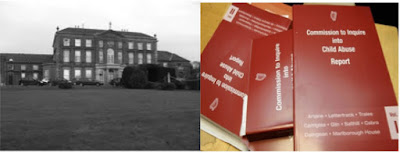
Above is the pseudonymous account of Graham from the 2009 Report of the Irish ‘Commission to Inquire into Child Abuse’ (The Ryan Commission). Graham was sexually abused as a child at a Catholic run special-needs institution, Our Lady of Good Counsel in Glanmire, Co. Cork. Tragically, Graham’s experience was far from exceptional, as the publication of the Ferns Report (2005), the McCoy Report (2007), the Murphy Report (2009) and the Ryan Report have highlighted the widespread institutionalisation and physical/sexual abuse of vulnerable children in Catholic run institutions in twentieth century Ireland. One strain of this wider phenomenon was the abuse of intellectually disabled children within institutions designed for their care. Concluding his testimony to the Ryan Commission, Graham posed a question. He asked: ‘Whose idea was it to grab children and fill their schools up with children, [the authorities] not knowing what was going on?’ (5.86)
To answer Graham’s question is challenging, as it requires an examination of state policy towards intellectually disabled children in the 1950s. This examination is necessary as the 1950s were a pivotal period for the establishment of the Irish system of disability care, in which Catholic run institutions became a central component of the state’s overall policy. Indeed, the 1950s saw a huge expansion in the capacity of Catholic Church run institutions to care for disabled children, growing from 1,168 residential places across seven institutions in 1950 to 2,620 places across fourteen institutions in 1960.
One reason for the propagation of Catholic institutional care lay in one of the predominant forces shaping state policy in 1950s Ireland, that of subsidiarity. This idea, which originated in Pope Pius XI’s encyclical Quadragesimo Anno (1931), held that ‘the task of the state … was to facilitate activity by other groups and persons within the community but not to supersede these if they were working with reasonable efficacy.’ In the case of the intellectually disabled, subsidiarity meant encouraging the development of voluntary sector efforts to care for this group. The state should not involve itself directly in the care of the disabled, the encyclical describing such an idea as ‘a great evil and disturbance of right order.’ The spread of subsidiarity was aided by a more general shift in Irish governance methods from the late 1940s onwards, as the state became more committed to Catholic concepts of statehood. Thus, to create a system of publicly funded, but privately operated, institutions aligned with the dominant ethos of Irish public policy in the 1950s.
A second probable reason lies in bureaucratic inertia within the Department of Health. Minutes from a meeting in November 1953 discuss three possible avenues ‘for providing [further] accommodation for mental defectives.’ These options were: Catholic run institutions, Catholic managed institutions with lay staff or institutions operated by local councils. Yet, while there were three options, only Catholic run institutions were considered by the Department of Health. Indeed, even the initial November 1953 meeting to consider the three options focused solely on religious run institutions, the minutes bemoaned ‘the reluctance of male orders to undertake further schemes.’ At the same meeting, Dr. Dolphin (a senior civil servant within the Department) noted his plans to visit a number of religious orders, including the La Sagesse order in Liverpool, the Order of the Sisters of the Sacred Heart of Jesus and Mary and the Augustinian Nuns, all to ‘enquire into their capacity for undertaking the care of Mental Defectives and the possible location of an institution which they might set up.’ Thus, both the prevailing trend within the state and the orientation of influential civil servants favoured an expansion of Church run institutions to care for the intellectually disabled.
This helps to account for the growth of these institutions in the 1950s, but not the lack of oversight from the state. The Ryan Commission alone, for example, noted the almost total absence of oversight from the state into conditions within church run institutions. A key reason for this may lie in the venerated position of Catholic religious orders in Irish life. Within the Irish parliament (Dáil Éireann), the work of religious orders was almost incessantly portrayed as beyond reproach, with members of Parliament (Teachta Dála) describing how it was ‘a revelation to go into these institutions and see the spirit of devotion, self-sacrifice and loyalty’ displayed by orders like the Brothers of Charity in the care of the intellectually disabled. Such veneration of the role of religious orders may account for why Graham’s institution, Our Lady of Good Counsel in Glanmire, did not receive an official inspection from either the Department of Health or the Southern Health Board ‘between the period 1939 and 1990.’ (5.39)
Hence, to even begin to answer Graham’s question requires interrogating a diverse range of influences that shaped mid-twentieth century Ireland. These forces determined the acceptable form of care for children with intellectual disabilities, leaving the state as the funder for a network of privately run uninspected institutions. Combined with the norms that venerated the authority and probity of the clergy, the Irish state produced an toxically insular system of disability provision, in which the abuse described by Graham could truly flourish.
Pictures of the home ‚Our Lady of Good Counsel“ and the Ryan Commission report
Works cited:
Barrington, Ruth. Health, Medicine & Politics in Ireland, 1900-1970. Dublin: Institute of Public Administration, 1987.
Power, Andrew et al. Active Citizenship & Disability: Implementing the Personalisation of Support. Cambridge: Cambridge University Press, 2013.
Ryan, Seán et al. The Commission to Inquire into Child Child Abuse. Dublin, 2009.
Whyte, John Henry. Church and State in Modern Ireland, 1923-1970. Dublin: Gill & Macmillan, 1971.
Recommended Citation David Kilgannon (2016): ‘Whose idea was it?’ Institutionalisation, State Policy and the Intellectually Disabled in 1950s Ireland. In: Public Disability History 1 (2016) 15. About the author: David Kilgannon is a Wellcome Trust PhD researcher in the History Department of the National University of Ireland, Galway. He was previously a Hardimann Scholar and a Wellcome Trust MA student. His research looks at the varied experiences of persons with intellectual disabilities in Ireland from 1947 to 1996. His previous research looked at the experience of AIDS activists in Ireland from 1983-9. Academia.edu: https://insight-centre.academia.edu/DavidKilgannon
In the countryside, an hour’s train ride away from the noisy central districts of Tokyo, the buildings of Takinogawa Gakuen stand in solitude, surrounded as they are by deep forest and tiny streams. As a social welfare center, Takinogawa Gakuen provides services to people with mental disabilities. The small institution has a long history. Visitors learn with a sense of surprise that this first institution of its kind, which was established in Japan more than a hundred years ago, continues its mission on the western outskirts of the metropolis.
In the past ten years, the field of disability history has been expanding hugely to include various areas of research from diverse perspectives. No historian can now ignore the critical importance of disability, which influences one’s social life, at the intersection with other social attributes such as race, gender, and class. To this current state of the field, the story of Takinogawa Gakuen and its founder Ryoichi Ishii will add another new viewpoint: a transnational perspective on the history of disabilities. What it means to be disabled varies with location. But historical inquiries reveal that different institutions of disability in various localities have often developed through transnational exchange of ideas and practices beyond borders.
Portrait of Ryoichi Ishii (Courtesy of Takinogawa Gakuen)
One of the most crucial and most rewarding tasks of scholars studying the history of disability is to contribute to the integration of disabled citizens’ voices into mainstream historical discourses. This also constitutes an important ambition of the research project Rethinking Disability: the Global Impact of the International Year of Disabled Persons (1981) in Historical Perspective which I am directing in the Institute for History at Leiden University with the support of a Consolidator Grant by the European Research Council.
Self-evident the ambition to render disabled people’s experiences accessible to the academic and non-academic public comes with particular challenges. One of the acute problems is the dearth of available historical sources. Documents relating to disability policies typically receive low priority when it comes to archival preservation and storage. On the fortunate occasions when those sources have ‘survived’, they have often not been systematized and catalogued and as such are particularly difficult to study. Moreover, while such policy-related documents provide us with valuable information about how representatives of the state, various institutions and organizations have approached disability, they can hardly offer an insight into the everyday life experiences of disabled people. Occasionally serendipity helps the researcher to find some interesting pamphlets, magazines, photos and other sources at some unexpected locations, such as the cellars and attics of disabled people’s homes or those of their organizations.
Last week, to the occasion of the annual carnival festivities, the people of Cologne firmly took control over public space. As a result the Cologne city-scape became packed with colourful costumes, dancing people and a lot of laughter. In between all those manifestations of carnival one occasionally could encounter a man or woman dressed up like a person with disabilities.
Costume of Frida Kahlo in Cologne Carnival
One of those persons was my colleague Mona Massumi. She masqueraded herself as the Mexican painter Frida Kahlo. Frida Kahlo suffered lifelong health problems and has often been a subject of disability theory.1 Mona decided upon this costume because for her Frida Kahlo symbolizes a “strong woman in history: despite her difficult personal circumstances (sufferings caused by her disability, infidelity of her husband and the lack of recognition as an artist) she didn't lose her passion and courage.” As Mona is quite into diversity studies, she is well acquainted with the discussions about the Mexican artist. Still, my guess is that theory was not the main reason why she chose this costume. Instead, I think her example shows that disability may have recently acquired a certain appeal, as it has become visible as opposed to hidden or simply forgotten.
Since its first steps in the 1990’s, the field of disability history has been growing and is now established as a specialized, specific and
accepted historical sub-discipline. By means of conferences, special
issues published by international recognized journals, courses on
academic curricula, a number of book series hosted by academic
publishing houses as well as research centres, memory sites and museums,
contemporary disability history emphasizes the value of ‘disability’
for scholarly research in general and historical research in particular.