June 22, 2020

Parental Advocacy and the Changing Attitudes Towards Down syndrome in Post-war Britain

By Sophie George

This article is based on a wider dissertation on ‘The Changing Attitudes Towards Down syndrome in Post War Britain’ written in 2019. It discusses the role of parental advocacy as a force for evolutionary change towards the inclusion of people with Down syndrome in post war Britain. I will therefore be focusing on the movements towards integrated education and the process of de-institutionalisation, as well as commenting on the introduction of the pre-natal test and its effects on the parental community.  At the start of the post war era, most children with Down syndrome were transferred to institutions and many were deemed ‘uneducable’. With the help of the parental movement, institutions were improved, community living was becoming a reality and education for people with intellectual disabilities like Down syndrome was more accessible and integrated. Whilst the parental movement helped change attitudes towards Down syndrome, it was not revolutionary and represents a piece within an evolutionary process that continues to this day.

This article includes some specific examples which, whilst they cannot be generalised do provide insight into the types of attitudes prevalent of the time.

The Growth of Parental Advocacy

The introduction of the pre-natal test, in some ways negatively affected attitudes towards Down syndrome, as it revealed an ‘anti-disability sentiment within society’ (Furedi 2016: 77). Parental attitudes towards Down syndrome in the 1970’s and 1980’s however were generally more positive than in the immediate post war decades. The introduction of the amniocentesis test which tested foetuses for conditions like Down syndrome and the legalisation of Abortion in 1967, meant that women who gave birth to babies with Down syndrome had generally chosen to. The increase in the conscious decision by mothers to keep a pre-diagnosed pregnancy was likely a cause for the increase in parental support groups in the 1980s. Support groups such as The National Association of Parents of Backward Children, now known as MENCAP, challenged the stigma attached to having a child with disabilities like Down syndrome. A report from Living with Handicap, a working party set up by the National Children’s Bureau in 1974, suggested that ‘Perhaps the greatest help we had …was to talk to other parents with a child with a handicap like ours’ (Dame Eileen Younghusband committee 1974). Therefore, choice meant those having children with Down syndrome were more likely to advocate for them, strengthening the community.

However, due to the fallibility of the test, some foetuses went undetected, thus some mothers gave birth to children with Down syndrome without knowing, or possibly wanting the child. For example, Mary Craig, a mother of a 12-year-old boy with Down syndrome stated, ‘I know all the horror, shame, disgust and fear that you feel initially at having given birth to an imperfect child’. However, she later argued ‘Nicky has given all the family so much’ (Grosvenor 1981). This could therefore suggest that the increase in the support groups and the availability of choice due to pre-natal testing, helped change the minds of those who previously may not have chosen to give birth to a disabled child.

Deinstitutionalization and Community Living

In the early post-war era, children with learning difficulties were often assigned to institutions or hospitals, mostly as a result of professional advice. Anne Crosby, who had a son with Down syndrome in the 1960’s, was unsure where the best place for her child was and so consulted a doctor. The doctor advised her to place him in an institution, heartbreakingly labelling him as ‘the throw away child’ (Sandino 2003).

Picture showing Matthew Crosby in the 1960s. Taken from – Charlotte Moore ‘The Throwaway Child’ The guardian (23/05/2009).

However, during the 1970s and 1980s, an initiative started by parents, which saw integration into the community as a possibility (Russell 1996: 80). As the post-war era progressed, parental charities began introducing projects to promote transition to community care. In 1958, the parent led charity The National Society for Mentally Handicapped Children carried out the Brooklands Experiment. This showed how effectively a child with intellectual disabilities in a home environment could develop compared to an institution and the results were published around the world. Although, some parents openly advocated for their children, some expressed advocacy more subtly, which was difficult to record. Eileen Clark, a mother of a child with learning disabilities, was a strong advocate for community living in the 1980’s. In a podcast for the Hidden Now Heard MENCAP project, she suggested, ‘The parents wouldn’t stand up for themselves’ (Hunt 2016). However, Clark also stated that her influence encouraged some parents to openly stand up against the authorities for the rights of their children. This highlights the power of parents in encouraging others to demand change, particularly in the introduction of community services. It does, however, suggest that by the 1980’s attitudes were not transformed and although many did, some parents still did not forthrightly advocate for their children.

One motivation for campaigns against institutional living and an improvement in services was the institutional scandals of the 1960’s and 1970’s. Maureen Oswin’s The Empty Hours: Weekend Life of Handicapped Children in Institutions published in 1973, exposed the unsuitable environment of institutions. It found that children in hospitals ‘are vulnerable to various forms of deprivation’ such as ‘intellectual deprivation, incompleteness and deep-seated unhappiness’ (Oswin 1973: 150). The Cardiff Ely hospital report, published in 1969, also questioned institutionalisation and inadequate services provided in institutions. The Ely Report found ‘cases of bad management, poor nurses and callousness’ (Wilkinson 1969). One such example was of a boy with Down syndrome who had his nails cut so short, ‘to an extent that must have been painful.’(The committee of Inquiry 1969) This can be used to demonstrate the types of negative attitudes towards Down syndrome in institutions in the 1960’s.  As a reaction, The Campaign for the Mentally Handicapped, which was predominantly led by parents, started a movement to improve services. This took the form of a petition of 12,000 signatures, which was sent to the government in 1974. As a result, the care at Ely hospital was radically improved and the scandal caused ‘the momentum to close the long-stay hospitals’ (Wales online 2012). These scandals therefore publicized poor conditions of institutions, encouraging parents and other individuals to demand improvement for care services and ultimately end the institutionalisation of people with intellectual disabilities.

A photograph showing a group of nurses and patients walking outside Ely. ‘outside of Ely Hospital’ The Peoples Collection- copyright Mona Hussey.

Photograph of a child at Ely Hospital in 1967 by Jurgen Schadeberg
Photograph of a child at Ely Hospital in 1967 by Jurgen Schadeberg.

Education

In 1945, some children with Down syndrome were not given an education, as those who were ‘severely handicapped’ were considered uneducable under the 1944 Education Act. From 1950-1977, segregation was occurring, with 55,00 children in 1955 in special schools and 135,261 in 1977 (Cole 2012: 33 –34). Whilst this could indicate more children were receiving an education, the exclusion of children from mainstream education only enforced negative attitudes towards disability. Despite this, parental advocates fought for change in the post-war decades, with many parents rejecting the segregation of children into special schools and pushing for educational inclusion. The Plowden report of 1967 helped recognise the need for educational inclusion and highlighted the significance and importance of the parental movement for the desegregation of education in mainstream Britain (Maguire 2006: 73).

The Education Act of 1970 entitled all children the right to education, encouraging the introduction of the Warnock Committee of Enquiry, which reviewed special education (Barton 1997: 146). The Warnock report in 1978, recommended that the term ‘special educational needs’ be adopted and normalised disability by suggesting 20% of children had some level of learning disability (Warnock et al. 1978). The report suggested statements of disability should be introduced and local government should be obliged to make provisions based on these. The 1981 Education Act was to implement these recommendations. However, because the report did not make economic recommendations, the Act allocated almost no resources to special education, demonstrating the governments ‘evasiveness about integration’, because of economic cost (Warnock 1996: 55). Despite this, the 1981 Education Act encouraged educational integration to become a reality in the 1980’s (Select Committee on Education and Skills Third Report 2006). As a result, contemporary Brian Stratford argues more professionals were ‘aware of the potential of Down syndrome children’ (Stratford 1985: 149). Integration of disabled children in mainstream schools in the 1980’s caused a change of attitude, as society was becoming more exposed to disabilities and thus feelings of ‘otherness’ were dissolving. Ann Borsay supports this, suggesting educational integration ‘is the most effective way of challenging negative attitudes…. And developing a more tolerant and open society’ (Borsay 2012).

Parents were however often met with resistance by education professionals. For example, MP Clement Freud stated in 1980, that teachers frequently responded with, “We do not take Mongols at this school; the other parents would not like it", when asked to take a child with Down syndrome. Nevertheless, some educational professionals worked to support the parental movement. Teacher and advocate Stanley Segal, for example, was extremely influential in the strive towards integration, after writing his book  No Child is Uneducable  in 1967. This supported the need for integration and better education for children with disabilities, challenging the assumption that some children with disabilities were uneducable. Segal therefore aided the parental movement and helped reinforce the need for the education acts of the 1970s and 1980s.

Douglas Hunt was a retired headmaster and parent to Nigel who had Down syndrome. In 1967, Douglas encouraged his son Nigel to write his own book, entitled ‘The World of Nigel Hunt; the diaries of a Mongoloid youth’. This book helped reinforce the educational capabilities of people with Down syndrome. The preface of the book includes a note from researcher L.S Primrose, who comments on Nigel’s ability and suggests he will ‘go on learning notwithstanding his extra chromosome’ (Hunt 1967: 10). Whilst the contents of this book are not complex, it does represent a transition from parental advocacy to self- advocacy. Primrose supports this, suggesting the book allowed Hunt to ‘speak on behalf of thousands of similarly effected people’ (ibid.). This book therefore demonstrated the abilities of children with Down syndrome and reinforced the need to provide better education. However, it also represents the transition to self-advocacy, where parents encouraged their children to find and use their own voices.
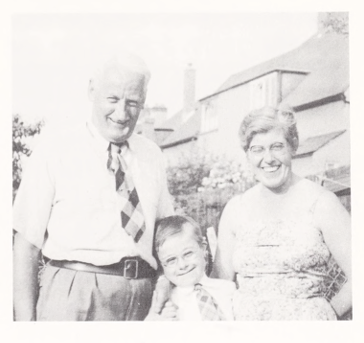
Nigel with his parents- taken from Nigel Hunt (1967): The World of Nigel Hunt; the diary of a Mongoloid youth, New York.
Nigel with his parents- taken from Nigel Hunt (1967): The World of Nigel Hunt, the diary of a Mongoloid youth, New York.

Conclusions and the birth of self-advocacy

The change in attitudes towards Down syndrome in post war Britain was not revolutionary or linear. The parents that took part in the advocacy movement for educational and community integration, encouraged a progression in attitudes and dispelled the social assumptions of ‘otherness’, by pushing for their children to be in the mainstream. Additionally, whilst change was occurring throughout the post war period, the 1970s and 1980s represented a period a significant development for the integration of people with intellectual disabilities.

As we can witness with the case of Nigel Hunt, the parental movement encouraged the self-advocacy movement. This movement continues today and is still working to ensure all people with Down syndrome are recognised as valuable and capable members of society, worthy of our understanding, acceptance and inclusion.


Sophie George is a history graduate from Swansea university, who wrote her undergraduate dissertation on 'The Changing Attitudes Towards Down syndrome in Post War Britain'. She is passionate about advocating for people with disabilities and is seeking a career in the charity sector.
___________________________
References
Ann Furedi (2016): The Moral Case for Abortion, New York.
Dame Eileen Younghusband committee (1974): Living with Handicap, London. Quoted from Philippa Russell (1996): ‘Parents Voices: Developing New Approaches to Family Support and Community’, in Peter Mittler/Valerie Sinason (eds): Changing Policy and Practise for People with Learning Disabilities, London, pp. 73–85.
Peter Grosvenor (1981): ‘Handicap? It was a source of joy for us’, Daily express, 10 August 1981, UK Express Online, https://www.ukpressonline.co.uk/ukpressonline/database/search/preview.jsp?fileName=DExp_1981_08_10_006&sr=1, [Accessed: 05/03/2019].
Linda Sandino (2003): Ann Crosby interviewed by Linda Sandino about her son Matthew who was born in the 1960s with Down syndrome, 26 March 2003.
Paul Hunt (2016): Eileen Clark interviewed by Paul Hunt about advocacy for people with Learning Disabilities in Wales, 12 April 2016.
Maureen Oswin (1973): The Empty Hours: The Week-End Life of Handicapped Children: Weekend Life of Handicapped Children in Institutions, London.
James Wilkinson (1969): ‘The Cruel Hospital’, Daily Express, 28 March 1969, The UK Express Online, https://www.ukpressonline.co.uk/ukpressonline/view/pagview/DExp_1969_03_28_001, [Accessed: 20/04/2019].
The committee of Inquiry (1969): Chapter 3 Of Report On Ely Hospital Individual Complaints Of “Ill-Treatment”, https://www.sochealth.co.uk/national-health-service/democracy-involvement-and-accountability-in-health/complaints-regulation-and-enquries/report-of-the-committee-of-inquiry-into-allegations-of-ill-treatment-of-patients-and-other-irregularities-at-the-ely-hospital-cardiff-1969/chapter-3-of-report-on-ely-hospital/, [Accessed: 20/03/2019].
Wales online (2012): ‘Why the Ely inquiry changed healthcare forever’ (6/02/2012). https://www.walesonline.co.uk/news/health/ely-inquiry-changed-healthcare-forever-2041200
[Accessed: 02/06/2020]. 
Barbara Cole (2012): Mother-Teachers: Insights on Inclusion, Oxford.
Meg Maguire (2006): The Urban Primary School, London.
Len Barton (1997): The Politics of Special Educational Needs, in: Len Barton and Mike Oliver (eds): Disability studies: Past, Present and Future, Leeds, pp. 138–159.
Mary Warnock et. al. (1978): Educational Needs: Report of The Committee Of Enquiry Into The Education Of Handicapped Children And Young People, London.
Mary Warnock (1996): The Work of the Warnock Committee, in:  Peter Mittler/Valerie Sinason (eds): Changing Policy and Practise for People with Learning Disabilities, London, pp. 51–60.
Select Committee on Education and Skills Third Report (2006). https://publications.parliament.uk/pa/cm200506/cmselect/cmeduski/478/47805.html, [Accessed; 12/03/2019].
Brian Stratford (1985): Learning and Knowing: The Education of Down syndrome Children, in:  David lane/Brian Stratford (eds): Current Approaches to Down Syndrome, London, pp. 149–166.
Anne Borsay (2012): Disabled Children and Special Education, 1944–1981. A presentation delivered at the Department for Education.
Nigel Hunt (1967): The World of Nigel Hunt; the diary of a Mongoloid youth, New York.


___________________ 
Recommended citation:
Sophie George (2020): Parental Advocacy and the Changing Attitudes Towards Down syndrome in Post-war Britain. In: Public Disability History 5 (2020) 2.

February 27, 2020

“People with disabilities in the GDR” – perspectives on public history from an inclusive historical research project

By Isabell Paulick and Sebastian Balling

Disability Studies is a trans- and interdisciplinary branch of science, which emerged from the international disability movement of the 1960s and has been discussed in scientific contexts in Germany since 2001 (Köbsell, 2012; Waldschmidt, 2015). It is based on a social model of disability, according to which people are hampered by society, for example by barriers, attitudes, actions and laws. This can be understood as a criticism of the medical model according to which people are handicapped due to a "defect".  Disability Studies thus represent a human rights model of disability (Degener, 2015). The emancipatory slogan "Nothing about us without us" is at the center of Disability Studies and therefore emphasizes the active role instead of the passive role of people with disabilities in the research process.

Started in April 2002 with the founding of the nationwide working group "Disability Studies in Germany" (AGDS for short), this branch of science has been gaining in popularity in Germany since the beginning of the 21st century. In 2004, the International Research Center for Disability Studies (iDiS) was established at the University of Cologne, and in 2005 the Center for Disability Studies (Zedis) was established at the University of Hamburg. In addition, research and teaching in Disability Studies is now being conducted at various universities in Germany, Austria and Switzerland. The first professorship for "Sociology and Politics of Rehabilitation, Disability Studies" was created at the Faculty of Human Sciences of the University of Cologne at the end of 2008. Within the scope of these institutions, various research projects have been established and are investigating the topic of disability.

A current research project is the joint project Menschen mit Behinderungen in der DDR (People with Disabilities in the GDR), which is carried out since November 2018 in cooperation between Kiel University, Bundeswehr University Munich and the Drachensee Foundation in Kiel. The historical research project examines the life of people with disabilities in the GDR from different perspectives in four subprojects.

Subproject 1 (Families with disabilities in the GDR) focuses on the lives of families with children with disabilities. From an everyday perspective, the project tries to uncover the lived experiences of families with disabled children, e.g. in regards to the (gendered) distribution of tasks and roles within the families or their communication with state or ecclesiastical caregiving institutions. Embedded in the broader context of general political, social and cultural developments in the GDR, the project analyzes changes of family everyday-life throughout the span of life of the East-German state.

Subproject 2 (Techniques of mobility and built environment) investigates the technologies of transport and housing as well as planning and architecture as related aspects of inclusion and exclusion. It also reviews state plans and announcements for the social integration of disabled people in terms of their actual implementation in everyday life. Therefore, people from various social spheres of the former GDR are being interviewed in guideline-based interviews. These include city architects and manufacturers of aids, those involved in disability policy, and disabled people affected by the decisions of these groups.

Subproject 3 (Media representations of disability) tries to uncover the largely unknown discourses on disability in official GDR-media such as dailies and television as well as small media such as private films and Samizdat-prints. The project asks about the changes in representations of disability during the GDR’s lifespan, the political use of disability representations for state narratives and their usage by different political groups. Further research focusses on the producers of media about disability: who produced which media narratives on disability/disabilities? How big was the share of people with disabilities and their relatives and friends in the production of these representations?

Some of the sources included in the subprojects 1 to 3 will be integrated in a digital exhibition with didactically edited accompanying material in cooperation with the Drachensee Foundation in subproject 4 (Digital Exhibition/Production of Open Educational Resources). The close cooperation between the Drachensee Foundation and the Kiel Institute for Inclusive Education is a central point in the project implementation and in particular in the creation of the digital exhibition. The Institute for Inclusive Education develops and implements educational programs by and with people with disabilities. In a three-year full-time qualification, people with disabilities are trained to become educational specialists. As qualified educational specialists, they convey the worlds of life, needs and specific perspectives of people with disabilities. The team sensitizes (future) teachers, specialists and management staff on an equal footing.


Education specialists of the Institute for Inclusive Education during a seminar.

Education specialists of the Institute for Inclusive Education during a seminar.


In order to ensure that people with disabilities have barrier-free access to the digital exhibition, the exhibition is being worked on closely with two educational specialists from the Institute for Inclusive Education. For them, this is the first research project they are actively involved in. This gives them the opportunity to actively incorporate their life experiences and expertise as directly affected people with disabilities into the research process. The educational specialists perceive this as an opportunity for a change of perspective. People with disabilities are not only perceived as research objects, but as active participants, which was not possible for a long time in this form. In particular, when creating the digital exhibition, they have the role of an expert in their own cause. The focus of this participative research should be on working at eye level with low hierarchies between project participants with and without disabilities. This is an important point to keep in mind throughout the research process.

Accessibility is an important issue in the context of the Internet as well as in the context of science communication. Accessible web offers can be used by all users regardless of their limitations or technical capabilities. Thus blind and visually impaired users can read out websites by software or have them printed in Braille. Deaf or hard-of-hearing people whose first language is sign language need tailor-made, special forms of presentation on the Internet. In addition to addressing the needs of people with disabilities, accessible means that in general, non-disability users will not face any barriers.

It is also very important that the scientific content is presented in a clear and easily understandable language without distorting the source material too much. Accessibility includes setting educational, training, and intellectual standards that are not excessive but adapted to the topic – this means that highly complex sources such as submission, TV-documentaries or need to be contextualized and commented in order to make them accessible to a larger audience. This context is particularly binding on public service web sites, in order to realize the demands for equal rights also of people linguistically handicapped in one country (mother tongue deviating from the majority), but also covers the problems of older people, which are not with the possibilities and methods modern communication and socially disadvantaged classes.

If asking the educational specialists of the Institute for Inclusive Education involved in the research project about their experiences in dealing with the Internet, they report some problems. For example, the use of complicated terminology or foreign words is a problem for the comprehensibility of the contents. It was also critically noted that when using audio-visual media, the tempo of videos, for example, often cannot be set. Too fast or too indistinctly spoken texts cause contents to be harder to understand. It would also be important to use audio descriptions to allow deaf people access to audio-visual content. Illustrated descriptions of complex content and the use of plain language are also helpful. The educational specialists also criticized the presentation of some webpages. For example, a too bright or dark color choice of the Internet pages leads to the fact that the font cannot be read well. Even too confusing presentation of the control elements or content is in the way of a good understanding of the Internet pages.

The close cooperation between the educational specialists as experts acting of their own cause and the scientific staff in the research project should ensure that these points are taken into account in the creation of the digital exhibition. Moreover, in other points concerning the research project, the expertise of the educational specialists will be included in order to meet the premises of Disability Studies.


Sebastian Balling is doctoral candidate at the History Didactics Department at the University of Kiel. Isabell Paulick is an educational research scientist at the Drachensee foundation in Kiel.

__________________________

References:
Degener, T. (2015). Die UN-Behindertenrechtskonvention - ein neues Verständnis von Behinderung. In T. Degener & E. Diehl (Hrsg.), Handbuch Behindertenrechtskonvention. Teilhabe als Menschenrecht - Inklusion als gesellschaftliche Aufgabe (S. 345–351). Bonn: Bundeszentrale für Politische Bildung.

Köbsell, S. (2012). Wegweiser Behindertenbewegung. Neues (Selbst-)Verständnis von Behinderung. Neu-Ulm: AG SPAK.

Waldschmidt, A. (2015). Disability Studies als interdisziplinäres Forschungsfeld. In T. Degener & E. Diehl (Hrsg.), Handbuch Behindertenrechtskonvention (S. 334–344). Bonn: Bundeszentrale für Politische Bildung.


___________________
Recommended citation:
Isabell Paulick/Sebastian Balling (2020): “People with disabilities in the GDR” – perspectives on public history from an inclusive historical research project. In: Public Disability History 5 (2020) 1.


December 6, 2019

Depression – A life threatening disability in Nazi Germany

By Jörg Watzinger

In this article I give a biographical sketch of my grandmother’s life in the context of Nazi psychiatry. She died in the psychiatric clinic Göppingen in May 1945.

My grandmother Marie Watzinger was born in 1880 in Munich where she grew up with two sisters. Her father was a professor of pathology. Marie had no professional training and did not visit university. Theatre and literature became a central part of her life as a young woman.

Marie as a young woman in Munich. Private photo
Marie as a young woman in Munich. Private photo.

In 1912 she married my grandfather Carl Watzinger, who worked as a professor for archeology at the university of Gießen. Together they had three children: Karl Otto, my father, born in 1913, Helmut, born in 1915 und Irmgard born in 1921. While my grandfather Carl was far from home as a soldier during WW1, Marie brought up the two boys single-handedly. In October 1918, following the call for a professorship of the Archeological Institute, the family moved to Tübingen.

In family conversations, I never got a response to questions I had about my grandmother. It felt like she had gone lost. I was pleased therefore, to find the letters she exchanged with my father during the two-year period of his imprisonment from1939 until 1941.

In the letters I discovered a woman who knew a lot about classical literature and music. With my father Karl Otto she embarked on an energetic exchange of ideas about literature. She could express herself well and had her own opinions about the literature she read. She had a particular love for Goethe, his poems “Poetry and Truth” and his letters.

Classical music was played in the home. She listened to Beethoven, Mozart, Haydn and Bach on the radio and she also enjoyed playing piano herself.

The longing for her children


Karl Otto, Helmut and Irmgard with their mother. Private photo.

My father left Tübingen for Berlin in 1932 to study law and to leave, as he called it, the professor´s village Tübingen, for the vibrating capital where the political future and the place of the working class in the new republic was to be decided. My uncle Helmut studied electrical engineering in Darmstadt. Up to 1940 my aunt Irmgard had been very present at home during the preparations for her Abitur (A-levels) supporting her mother. After a compulsory labor-service she moved for Karlsruhe to study fine arts. Many letters convey how much my grandmother missed her children. On many occasions she made references to Irmgard’s youthful freshness and cheerfulness.

November 1940 my grandmother celebrated her 60th birthday in Tübingen. Her sister sent her favorite chocolate cake from a Munich cake shop. My father Karl Otto, supporting the SAP (Sozialistische Arbeiter Partei), imprisoned due to aiding and assisting high treason, could not be with them. After his release from prison in September 1941 my father was abducted to Dachau concentration camp. He stayed there for the next three years as a political prisoner. The abduction to Dachau concentration camp marks the end of her correspondence with my father. He corresponded from now on only with my grandfather Carl. When Marie did write at all, it was only a few short lines.

What happened to Marie?

For information on the last three years of Marie’s life, I have as a source the correspondence of my grandfather with the clinic in Göppingen and with his sister in law, Irma. In addition to this, I visited the clinic in Göppingen twice.

After Karl Otto’s deportation to Dachau concentration camp, Marie’s condition deteriorated significantly. In addition to physical incapacity due to extreme asthma, came mental difficulties. She had difficulties with concentration. She was restless, hardly slept, talked without cease and could no longer keep the household running. New maids ran away after short time.


Last photo of Marie Watzinger (r.) with her daughter-in-law Hanni, Christmas 1942. Private photo
Last photo of Marie Watzinger (r.) with her daughter-in-law Hanni, Christmas 1942.
Private photo.

After one year, in autumn 1942, my grandfather committed her to psychiatric services in Göppingen for the first time. The letters of my grandfather show that this decision was made after lengthy consideration of the situation with his sister-in-law. The advice of specialists was taken. In the clinic, Marie was diagnosed with a restless depression and a drug addiction to a stimulant asthma medicine.

Marie’s condition deteriorates 

After two years in the clinic without any improvement, weight loss resulting from a refusal to eat, became a focus of medical attention. During this time, autumn 1944, my father Karl Otto was forced to join the SS Brigade Dirlewanger to the eastern front in Hungaria. Irma, Marie’s sister, died from a bombing raid in Giessen. Marie weighed only 39 kg. Bed rest was prescribed, apparently to prevent extreme restlessness when getting up. She fell silent, blamed herself to be the cause of all misfortune. In March 45 Göppingen, city of heavy industry and garrison, was bombed heavily. The patients had to move to the air-raid shelter and stay seated there for long time. In this context Marie broke her leg. In April 1945 US Army occupied Göppingen without any further resistance. On 4 May 1945 Marie died in the clinic.

Marie is also a victim of the Nazi rule

In 1933 after the begin of Nazi rule at the university of Tübingen the majority of students and professors welcomed the new regime enthusiastically. My grandfather was the only professor in Tübingen who had not joined the NSDAP. For a sensitive person like my grandmother, my father called her „schwernehmerisch“ („she could not take things easy“), the violent vibrations of the Nazi politics were clearly noticeable even at her home filled with classic music and literature. Factors which triggered the aggravation of Marie’s condition, which led to the hospital admissions, were the arrest of my father Karl Otto in 1939 and the beginning of the war in 1939. To a greater extent, the abduction to concentration camp of Karl Otto in 1941 after his return from prison.

Psychiatry in Nazi Germany did not offer support or therapy that time. In contrary, it was life-threatening to become mentally ill. Patients were declared as genetically damaged, forced sterilization started already in 1934, until 1945 about 400.000 people were sterilized. Later they were declared as „life unworthy to live“: many of these people were finally murdered under the label „Euthanasia“.

During the T4 action 1940/41 70.000 patients were taken away from psychiatric clinics and murdered in special institutions, i.e. Hadamar or Grafeneck. After the end of T4 action the killing did not end. It went on inside the psychiatric clinics, altogether 300.000 people were murdered until 1945 in context of Euthanasia. This equals the number of all psychiatric patients in Germany in 1929.

There were two main arguments in Nazi politics regarding psychiatry. One was saving public money and the other was Eugenics. Both existed before Nazi rule, but both were discursively combined and practically executed without any compassion like nowhere else in the world. With the world-wide economic crisis in 1929 the money for the clinics was reduced already in 1930 as a consequence of tax deficiency.

Eugenics was the answer of the psychiatry in whole Europe on the frustration, not finding remedies for mental health patients. Instead of healing the patients the society was healed from the patients, as Mr. Brüggemann, psychologist in Christophsbad for 40 years, put it during my visit in spring 2019.
The killing of patients started with the so called T4 action in 1940. As a thorough investigation showed, from the clinic Christophsbad 293 patients were taken away, all „Staatspfleglinge“ (patients who stayed in a private clinic, but whose costs were paid by the state). 182 of them were murdered evidently. Many of them died afterwards in the different institutions. Only 61 patients have survived the crimes of „Euthanasia“. A clinic internal group working on T4 has not found any evidence that wild euthanasia has taken place in Christophsbad after T4 action was stopped.

Clinic Christophsbad in Göppingen, photo: Christophsbad
Clinic Christophsbad in Göppingen, photo: Christophsbad.

My grandmother was lucky to stay in a private clinic, where the doctors were not obliged to the „Euthanasia“-ideology. They took care to keep their patients alive, at least to keep the clinic running economically after the loss of the „Staatspfleglinge“.

My father survived three years at Dachau concentration camp. My grandmother died without getting news from him and without hope to see him again four days before the liberation from Nazi rule. Although her life had a such sad end, to come to know that she had not been murdered was a great relieve for me. I am glad to give a place to my grandmother in family and in public memory.

Jörg Watzinger is engaged in connecting descendants of Nazi persecuted people and in initiating groups of descendants.
_________________________________

References:
Ernst Klee (2014): "Euthanasie" im NS-Staat. Frankfurt a.M.
Hans Ludwig Siemen (1987): Menschen blieben auf der Strecke. Gütersloh.

Thomas Stöckle (2016): Die „Aktion T4“ und die Heilanstalt Christophsbad in Göppingen. Göppingen.

Recommended citation:
Jörg Watzinger (2019): Depression - A life threatening disability in Nazi Germany. In: Public Disability History 4 (2019) 12.

September 27, 2019

Augustin Thierry and the Many Eyes of a Blind Historian


By Giorgia Vocino

Born in 1795, shortly after the end of the reign of Terror, Jacques Nicolas Augustin Thierry was an enfant prodige. Born in a modest family, delicate and often sick, he could not live off his family income nor start a military career, but he could count on his sharp intelligence to climb the social ladder. Graduate from the École Normale, in 1811 he started working as the secretary of Claude-Henri de Rouvroy, count of Saint-Simon. Vibrant supporter of the liberal party and close to the milieu of the Carbonari, Thierry began an independent career as a journalist, but was soon drawn to the study of history: in 1820 he published in the Courrier Français nine Lettres sur l’Histoire de France, while in 1825 the publication of the Histoire de la conquête de l’Angleterre par les Normands crowned him as a historian and won him a place among the most reputed scholars and authors of his time. It was in those years of hectic and passionate study that his health problems started to take a toll on his life and his work.

Signed copy of l'Histoire de la conquête (Bibliothèque Abbé Grégoire)

Thierry’s eyesight progressively declined and eventually left him blind. Thought to be the consequence of a work rhythm that was too demanding, he was dubbed the Homère de l’histoire by Chauteaubriand. The legend of a young and heroic martyr for science started to take shape. Blind and progressively afflicted with paralysis, the historian showed the symptoms of an undiagnosed syphilis that made it impossible for him to work without the assistance of others. Despite his condition, Augustin Thierry maintained a remarkably intense work routine that allowed him to publish new works and to restlessly revise his oeuvre.

Corrected Proofs of the Récits des Temps Mérovingiens (Blois, AD41_F_1946B)

For the following thirty years, Augustin Thierry was assisted by secretaries and other collaborators whose names remain in the shadows. The archives of the Thierry family still preserved at Blois are a precious testimony to the functioning of the group of people surrounding the historian and working with him and for him. Thirty notebooks, known as the Cahiers de la chambre, were filled in between 1836 and 1844 with drafts, excerpts of sources, reading notes and personal memos that give shape to Augustin Thierry’s intellectual and social small world. Available for consultation on the website (shelf-marks Blois, Archives départamentales des Loir-et-Cher, F 1576 and F 1577), these notebooks constitute one of the most interesting, yet enigmatic documents in the Thierry archives digitised by the ArchAT project (Université d’Orléans – IRHT CNRS, project blog). Many hands can be spotted in their pages alongside one another, hands whose identification is a challenging operation that has never been attempted.

The Cahiers de la Chambre (Blois, AD41 F 1576 and 1577)

Among these hands one can find Augustin’s official collaborators: his personal secretary Charles Cassou as well as Martial Delpit, a graduate from the Ecole des Chartes salaried by the government within the frame of the national project of the Monuments du Tiers Etat supervised by Thierry. Scholars themselves, both men assisted Thierry in the study of the sources that laid the foundations of his history writing, chiefly the Récits des Temps Mérovingiens, and helped him with the revision of his earlier works and the drafting of new publications. The impossibility to lead his research autonomously casted a shadow on the originality of Thierry’s works already in his lifetime, as it is proved by an article published in 1837 in the Revue des Deux Mondes in which Désiré Nisard openly acknowledged the role of collaborateur for Augustin’s secretary Armand Carrel (deadly injured in a duel in 1836), while Thierry claimed full and exclusive responsibility for his literary output.

Draft letter to the director of La Revue des Deux Mondes (Blois, AD41, F 1576 02)

As a matter of fact, the blind historian could count on many sets of eyes, first of all those of his wife, Julie Thierry, herself a literate woman and a novelist whom he married in 1831. Julie’s pivotal role in Augustin’s everyday life can hardly be underestimated, but her work as an assistant emerge clearly from the notebooks where her hand drafted letters and noted down the words dictated by her husband. Furthermore, less literate scribes can also be found in the Cahiers de la chambre: their faulty orthography and unpolished handwriting make clear that they were not salaried secretaries, but off-the-record assistants most likely chosen among the household help. Augustin’s footman was probably responsible for writing down Augustin’s thoughts and work instructions, and years later, in the 1850s, it was his personal physician Gabriel Graugnard who not only took care of the by-then completely paralysed historian, but also helped him in his scholarly work.

Handwriting of Augustin Thierry's Footman (Blois, AD41, F 1577 8)

The study of Augustin Thierry’s archives and particularly his notebooks thus allows us to get glimpses of the creative process behind the writing of an author who could not write. In particular, the analysis of the complex documents that are the Cahiers de la Chambre opens for us a window on the everyday work routine of a blind historian. The centrality of the spoken word and the practical, and yet crucial organisation of the writing thus come to the fore as key research areas. The nineteenth-century Homère de l’histoire was surrounded not only by his official secretaries, but also by informal and too often forgotten assistants whose existence and importance should not be overlooked. The ArchAT project therefore has the ambition to describe the wider scholarly network as well as the small domestic world in which Augustin Thierry conceived and worked on his oeuvre and more specifically on his masterpiece, the Récits des Temps Mérovingiens. This means reconsidering the boundaries of authoriality and highlighting the choral dimension of the writing of his best seller, the influence of which can still be observed on the ideas about the Early Middle Ages, understood as a dark and violent time, that are deeply rooted in the collective imaginary.


Giorgia Vocino is a post-doc in the ArchAT projet (University of Orléans – IRHT-CNRS).
_____________________________
Recommended citation
Giorgia Vocino (2019): Augustin Thierry and the Many Eyes of a Blind Historian. In: Public Disability History 4 (2019) 11.


September 10, 2019

On Blindness in Poetry

By Reja-e Busailah

I am told that I lost my eyesight during the seventh month of my life. I was educated in boarding schools, in schools specially for the blind, and in public schools. I taught the blind when I was still living in Palestine, where I was born in 1929, when I lived in New York City, when I worked in Kuwait; and I hold a master’s degree in special education. Still, I should be embarrassed to admit that studying in a scholarly fashion the phenomenon of blindness (“disability”) has never seriously interested me. I have a Ph.D. in English Literature from New York University, and I taught literature for some thirty years. I am now a retired professor emeritus. I have enjoyed poetry all my life, writing it in Arabic when a child and later in English. I may say I have used poetry to react to all things that have interested me including, of course, the phenomenon of blindness, not academically, but as a poet. I have lived with blindness all my life, and have become accustomed to the ways and means, so to speak, of the phenomenon. To a large extent this “disability”, then, is only one of the phenomena of ordinary life, to be dealt with as an aspect of life, with, if you like, what most sighted people would judge with special consideration. I have lived so long with the phenomenon. I do not consider it special.

Reja-e Busailah with his latest publication Poems of a Palestinian Boyhood.

As I have said, I am a poet. I am a poet first and foremost, and my poetry is a reaction to as many phenomena of life as I am aware of: personal and general, emotional, social, political, and so forth. Needless to say that all these phenomena interact and influence each other. They give to each other and take from each other. My poetry deals with all of this and more. I write poems about blindness with as much comfort as I would write poems about “the honeysuckle, that divine commoner”, the call of a bird, the behavior of a politician, or the face of a girl as conveyed to me by her voice. Yet they are poems which, in a sense, focus on a specific phenomenon, the phenomenon of blindness, some directly, some not so directly, while still others deal with the theme from quite a distance. Moreover, these poems are all taken from a manuscript, Poems Out of Sight. Blindness, in one way or another, to assert once more, is in each of my poems, though none of them was written with the purpose of exploring the theme. They were written only in response to the dictation of the circumstance prevailing about the time of the writing.

Let me comment on a specific aspect of the many consequences of blindness. Much of the experience an ordinary blind person gets is through the ear, through sound and through the complexity of sound which produces the word. Space does not allow here for an at length discussion of touch. The blind person hears of a vast field and of a limitless sky, and the acquisition of this experience does not stop with hearing. The blind person has been given the word, and words are pregnant with concreteness and an infinity of growth, concepts, and connotations. Thus a word becomes the repository and vehicle of our intellectual growth, of civilization itself. A blind person, then, has the benefit of the word. Blind people are capable of participating in most of the social activities of the sighted. You find them engaged in all sorts of activities theoretical and practical, scientific, technical, and philosophical, in education, in politics, and so forth. I cannot forget the two blind men in Kuwait who came to learn Braille, the three R’s and so forth while still keeping their job of earning their daily living. After class or before it, they would swim to anchored ships to bring ashore in large leather sacks the sweet water the country needed then. This is why segregating the blind from the rest of society is a bad mistake. Integrating them with the rest of society is very beneficial to both.

Reja-e Busailah reading poetry for his YouTube channel.


Let me select only a few of the manifestations of the interaction between blindness and the world of sight or society as I have experienced it in action and in reflection. I will present the examples of these manifestations only as they are treated in my poetry. Blindness in the poems is not primarily the focus. The focus is on the poem and only an aspect of the phenomenon is used or mentioned, sometimes seriously, sometimes humorously, and so forth.

It has long been held that blindness is a mystery with supernatural roots and origins. Blindness is a curse or a blessing from God or from some mysterious power. Two superstitions emanate from this in “The Four Branches”: the husband who opens the day with rage and anger on glimpsing a blind person crossing his way, and the wife who ends the day pleased and contented because the blind person is the first to enter her store, which brings her so much business this day long. The blind person is aware only of

the morning greeting
of the sapling of a child
[which] reaches the blind ears,
hesitant yet resolute,
unaware of the cares of sight,
innocent of the confusion
on the awakening of the soul.

In “Journey of a Curse”, this attitude is given a clearer expression. The blind child throws a rock at the old man, who responds by

he panted up the hill,
he paused at what he saw,
he cursed under his breath:
“No wonder God smote you blind!”
He spat on his left,
his footsteps echoed into the dusk.

At the end of the poem, though, the blind boy has acquired some education, and is able to repeat to his interlocutors:

“When man is good,
he is higher than the angels;
when he is not good,
he is lower than the beasts.”
The couple listened with wonder and humility,
“God blessed the blind for reasons
man’s ken may never probe!”

In “Virgil and Beatrice”, the emphasis is on something that happens pretty regularly everywhere, and on the humor with which it is treated:

So normal was that day,
“normal,” you know what I mean
that you couldn’t but think of the cliché
which pops up into the blind mind’s remembrance
upon such a day:

“Does your dog bite?”
“You bet he does.
Virgie would love to have a hunk
of your flesh for his dinner!”
After all, if it had to be so,
let it be him, not me!
I would be lying,
if it were the reverse.

Or upon another such day:
“What’s your dog’s name?...
Isn’t he adorable?...
He’s your best friend, isn’t he?”

“To tell you the truth, he isn’t.”
This bemused the poor woman,
shocked her into a strange silence,
staring as a blind man thought
until he enlightened:
“Betty is my best friend,”
touching his wife’s arm.
After all, wasn’t she the one
who was going to pacify his hunger that night?

“To Whom” is a commentary on factual events pretty common in life and quite similar in sound, and shall I say, looks too. The poem concentrates on violence. The blind child is a member, an essential member, of a community similar in fate and the workings of fate. The dog is helpless while being clubbed to death because he is tied. The blind child (actually the author) is lashed and lashed until his feet are bloodied and swollen when he is thrown on his back with his feet gripped tight. The girl is also held down on her back with the boots of two men on her hands, “that the third may thrust and thrust and thrust,” while the AK-47 is impatiently waiting to complete the job. Now, the fate of these three is the same as the fate of Palestine when Great Britain for thirty years held the people violently down in order to give the country to the foreigners. And this she did with great success, accompanied by dark horrors either unknown or wantonly ignored.

The speaker knows (mentally) that his wife sees with her eyes in the poem “Her Eyes.” But he does not see. How does he circumvent the frustration?

If the sound of her voice is the spark
which puts out the old stars, which inflames the dawn
and makes thirstier with the dew the beams of the sun
forever young
forever old;
if the sound of her voice is the start
which ripples through the day
hour by sparkling hour
and tipples in the bright and the red
before it comes ashore;
if the sound of her voice is the birth and the breath
and the pulse in the soul
and the spirit of the pulse—
I wonder what is left for the light of her eyes!

Far-fetched? Maybe, but there is an adequate substitution for the absence of sight, however subjective or arbitrary it may be. Sound, or the word here, has supplanted sight. In “Two Airs”, you may say the picture is reversed. The author would perhaps paint the sound of the cardinal were he not blind. Instead he imagines a parallel to the sound of the cardinal. Here the two songs of the bird resemble two objects, the carnation standing on its stem and a flourishing bell:

Two airs of a cardinal
(he has quite a few in his repertoire)
a cardinal who is either fully oblivious
to the world, or wholly of it.
Like children scaling up and down a fragrant dream,
one air scales up
the other scales down
the length of a white carnation
standing on its stem,
An air flushed starting downward
from the brim of a cup of sunlight,
another blushing as it flourishes
upward towards bell’s bloom.

Again, this may sound too far away from the “disability” blindness. All the same, blindness remains related to the poem. “A Note on Touch” best exemplifies the highly subjective, arbitrarily subjective, treatment of something physical with imagery acceptable perhaps only to its author. One aim is to reject the attitude among the sighted that touch replaces vision. Space is too narrow for discussing the poem at length.

The face of the sick child shocks the mother,
she sees it as a hard-boiled egg!
The child runs a blind hand
over the face of the peeled egg,
it is smooth and soft, it is delightful:

Touch, therefore, when shielded from the representations
of the sense of light,
grows its own garden of realities,
solid facts
as a matter of fact,

anchored outside the domain of vision.
The fallacy, therefore, of assuming
that hand and eye are relatives
only breeds the falsehood that the dynamics
of, say, a fish’s mouth

in either’s hold are similar
if not the same;
(but let us first dispose by way of footnote
of the man who out of touch with sight
once marveled greatly at the marble mouth1

all misled by its smoothness from its severity,
or of the goddess of beauty who short-touchedly
mated with a bandy-legged bore2):
to the touch pure and free
the mouth of that primary beast

becomes a mermaid’s
transported into a summer’s nigh-haze
composed of mist-moistened sun,
and a vase in her hand
gleaming through the morning

the special mouth beaming
as on a crystal range
the clarinet’s scale in bloom—
visual sensibility tamed fantastic
if you like by the alchemy of touch.

Blindness then is the deprivation of sight. In such poems as we have just mentioned mixed imagery is resorted to, not perversely, but in reaction to the pressure of necessity. The visual experience which is absent here is expressed by, or translated into, the experiences of the remaining faculties. It is hoped that this arbitrariness is still compensated for by these new experiences. But it is the reader who will have the ultimate judgement on the treatment of the theme in the poems as well as their artistic quality.

The “disability” of blindness, then, occupies much more of the human concern than do other disabilities. As we have seen, this is due to the nature of the impairment of the disability. It so lends itself to varieties of interpretations, expansions, modifications, and so forth. No wonder, then, that Jose Saramago devotes a whole novel to blindness as a metaphor in which a whole city goes blind.

Reja-e Busailah accepting the Palestine Book Award for Best Memoir 2018 in London.


Reja-e Busailah’s latest publications are In the Land of My Birth: A Palestinian Boyhood (Institute for Palestine Studies 2017), winner of the Palestine Book Award (2018) and Poems of a Palestinian Boyhood (Smokestack Books 2019). He enjoys sharing his poetry with others especially reading his poetry on his YouTube channel. 

________________________________
Recommended citation
Reja-e Busailah (2019): On Blindness in Poetry. In: Public Disability History 4 (2019) 10.


August 27, 2019

The exhibition “Prohibition of Handicap”: challenging public perceptions of disability in 1970s Sweden

By Anna Derksen

In the early 1970s an unconventional exhibition traveled Sweden: By inviting visitors to experience disability from the perspective of a wheelchair user, Prohibition of Handicap tested the boundaries between the individual limitations of a disability versus those created by society. The exhibition was a cooperation between the public exhibition agency Riksutställningar and students of interior design at Konstfack, the School of Arts, Crafts and Design in Stockholm. With a thought-provoking title and a crossed-out wheelchair as its symbol, Prohibition of Handicap was shown between 1971 and 1973 in 23 different locations all over the country and confronted about 75.000 visitors with the radical message that disability was not the result of an individual deficit, but an inaccessible social environment full of barriers, ignorance and prejudices. However, not everyone thought a state-funded exhibition to be the right place for such messages, or even saw it as it a “single-minded and one-sided political propaganda campaign.”

How could an exhibition about disability spark a debate on propaganda? In this post I will look at how Prohibition of Handicap, and the discussions it created, influenced perceptions and notions about disability in Swedish society.

Poster and image from the exhibition Prohibition of Handicap. The text on the right reads: "People are different. Both in the body (physical) and the soul (psychical)."

The main reason why Prohibition of Handicap caused such strong reactions was that the curators made use of the more critical ideas within the Swedish disability rights movement. Already in the 1960s disability in Sweden came to be seen more and more as a societal issue, caused by a mismatch between the individual and the social environment. The debate had been triggered by disability activist and wheelchair user Vilhelm Ekensteen and the group Anti-Handikapp with the book In the Backyard of the People’s Home (På folkhemmets bakgård, 1968) that critically analyzed the living situations of persons with physical and intellectual disabilities in the Swedish welfare state. Recognition of political responsibility, removal of social barriers and a change of common perceptions became the activists’ central demands.

With Prohibition of Handicap, this redefinition of disability was lifted out of its theoretical foundations and placed squarely in the center of societal debate. The title and poster were just the start. Even more direct were the texts displayed in the exhibtion rooms, adding social isolation, poverty, age or unemployment to the list of causes (and effects) of disability. That the message resonated with the public reflects in an article in Västerbottens-Kuriren after the exhibition was reopened in 1976: "Prohibition of handicap, someone wonders. That's impossible. Well, said Gunnar Olofsson in his welcoming address. By adapting society and the environment to the benefit and needs of all people, it is possible. We want to remove barriers that create disabilities." (1 April 1977).

Drawing from Riksutställningar’s exhibition How to make a rotten exhibition, in: Westerlund, Knuthammar (1981), p. 177.

Experiencing disability
How can a traveling exhibition engage the local public? This was a recurring question for Riksutställningar. Although media differed in their opinions on the critical understanding of disability, they agreed that Prohibition of Handicap offered a stimulating, for its time even trailblazing visiting experience. To enter the exhibition, visitors were placed in a wheelchair and navigated their way through different rooms: a sitting room, a street with impeding curbs, a job center and a grocery store. Critical texts, interviews and video clips gave further information about how persons with disabilities lived, their dreams and hopes, and what kinds of problems they encountered in society.

However, evaluations of the exhibition show that this 'disabling' of the visitors led to mixed results, and that the difficulty of using a wheelchair in the confined space of the exhibition also had its setbacks. Most importantly, the focus on mobility pushed back more subtle messages of social and economic exclusion. Point of departure was still the disabled, ‘wheelchair-bound’, individual, as a report on study visits to the exhibition testifies:
"The participants were completely focused on getting around with the wheelchairs and did not stay so long in the different rooms to read the many texts. Not even the TV with its moving pictures could stop many in their tracks." (SOU 1974:43).

Visitors moved through the exhibition in wheelchairs and could try out an accessible kitchen with movable and height-adjustable components.


Politicizing disability
That a state agency like Riksutställningar decided to endorse a critical conceptualization of disability, one that also laid bare the state’s own failures and omissions in creating a welfare society for all, is in itself quite remarkable. But even before Prohibition of Handicap was officially opened in 1971, Riksutställningar made a sudden announcement: "We had to make the sad and unpopular decision not to continue the production of the exhibition. We had hoped to give people an exhibition where there was the opportunity to interpret the problem in different ways. WE have not requested any opinions. WE have commissioned an 'informative' factual inquiry into the physical situation of the disabled." (Lennart Holm, Dagens Nyheter, 2 July 1971).

How political should a state-funded exhibition be? Where to draw the line between education and propaganda? These questions eventually entered more general debates on the aims and limitations of cultural policy in the Swedish parliament. "The most serious objection was that the preliminary exhibition material with its clear ideological reference tried to put an ideological hallmark even on the efforts to increase accessibility in society for the disabled. The management of Riksutställningar could under no circumstances accept such a turn of the purpose and message of the exhibition." (debate in the Swedish parliament, spring 1972).

Outraged media discussions and pressure from disability organizations to revoke this ‘censorship’, as they called it, eventually caused Riksutställningar to back down and open the exhibition in late 1971 after some of the more controversial texts were revised. Prohibition of Handicap then traveled Sweden for about two years, sparking lively debates about disability in its wake. But the incident also had significance for the relationship between the disability rights movement and public authorities, as the latter were urged to recognize persons with disabilities as a group with serious political demands.

Left: Still from the YouTube film Riksutställningar 1965-2017, "Why do I have to be isolated?"  Right: Image from the exhibition, “The high rents furthermore force many people to live in old, rundown, unhygienic homes. They also become socially handicapped."
Left: Still from the YouTube filmRiksutställningar 1965-2017, "Why do I have to be isolated?" | Right: Image from the exhibition, The high rents furthermore force many people to live in old, rundown, unhygienic homes. They also become socially handicapped."


Reveal, challenge – and change?
Prohibition of Handicap had been a political forum from the start. That a state agency like Riksutställningar decided to broadcast a critical view on disability in a public exhibition anno 1971 is noteworthy, both regarding the topic and the early date. But its influences on public opinion were mixed. The social causes of disability were a powerful message that contrasted with prevailing images of persons with disabilities as pitiful, causing a rethinking of disability also outside the small group of activists like Anti-Handikapp. However, it quickly became overshadowed by the political debate on propaganda and censorship, and the ‘wheelchair experience’ caused the focus to remain on accessibility. In Lund, some older houses were made wheelchair-accessible. In Kalmar, participants of a study circle remonstrated in front of the post office after trying and failing to enter it in wheelchairs, and sent a protest note with a sketch for reconstruction. Finally, the exhibition brought different fractions of the disability rights movement together. Its reopening in 1976 happened on demand of the disability organizations:
"Bring along your family, friends and acquaintances to the exhibition when it comes to your area! Prohibition of Handicap is an important exhibition, and a united disability movement stands behind it." (Svensk handikapptidskrift 4, 1976)

Sources and further readings:
All photo credits belong to Riksutställningar and the respective photographers.
  • Broms, Helene; Göransson, Anders: Kultur i rörelse. En historia om Riksutställningar och kulturpolitiken. Stockholm: Atlas 2012
  • From travelling exhibitions to an information centre, in: UNESCO: Museum, XXXVIII, 4 (1986), temporary exhibitions, 205-206.
  • Riksutställningar: Omtänkt. Ett magasin från riksutställningar om tillgänglighet i museivärlden, 2017.
  • SOU 1974:43: Utställningar. Betänkande av 1965 års musei- och utställningssakkunniga.
  • Swedish National Archives: Riksutställningar/Projektarkivet/Projekt nummer 1 073/F1A
  • Swedish National Archives: Handikappförbundens Centralkommitté, SE/RA/730108/F /F 6/F 6e/7.
  • Westerlund, Stella; Knuthammar, Thomas: Handicaps prohibited. Travelling exhibitions in Sweden, in: UNESCO: Museum, XXXIII, 3 (1981),Museums and disabled persons, 176-179.

_______________________________
Recommended citation:
Anna Derksen (2019): The exhibition “Prohibition of Handicap”: challenging public perceptions of disability in 1970s Sweden. In: Public Disability History 4 (2019) 9.

July 22, 2019

Three hundred years of legal incapacity in Russia

By Yana Litins’ka

The concept of legal capacity is one of the most important concepts related to the personal status in law. When a person loses legal capacity, it means that he or she is no longer allowed to make decisions for themselves. Instead, a guardian makes decisions for them about things such as what to buy, with whom to live, what treatment should one get. A common reason for depriving people of their legal capacity is, historically as well as today, intellectual or mental disability. But how has the law of a specific state developed to define when persons become unable to make some or all the decisions about themselves? Which criteria have been used? Have these criteria been transparent and non-arbitrary? Who should decide whether a person is incapable: medical professionals or lawyers? In this post, I will focus on the legislative history of Russia concerning the deprivation of legal capacity due to mental disability.

The legislation on the deprivation of legal capacity in Russia was next to non-existing before the reign of Peter the Great. The primary internal concerns of the monarch were related to building a modern, reliable and sustainable system of governance. In line with this aspiration, it was considered that persons unfit to represent the state must not carry out this function. The Decree on Examination of Fools in Senate of 1722 was therefore established. The legislation targeted the noblemen who had inherited their posts as public servants. The Decree made it possible to deprive noblemen of their right to work as officials or as scientists, inherit property, marry and receive an education if they were considered “fools”. A year later, the legislator also laid down the procedure for the capacity assessment. This procedure required that the members of the Senate question a person whose capacity was impugned on any topic. The person in question needed to answer as “a wise man answers” or they would be considered “fools”, and therefore deprived of the aforementioned rights. The criteria for assessment, formulated in terms of being a “wise” or a “fool”, and the possibility to ask about anything, inherently allowed the Senate to have a broad margin of discretion in making the decisions about incapacity.

Senate assembly during the reign of Peter the Great by Dmitry Kardovsky

Linguistically, “fools” in Russian legislation of the eighteenth century were not necessarily persons with mental disorders. The language of the act emphasised behaviour and intelligence, rather than the diagnosis. However, in practice, the Senate’s concerns were related to the differences between the real and fake mental disorders. In 1746 the Senate requested that the Medical Board clarified the scientifically proven methods of recognising mental disorders. The Medical Board’s report stated that a careful and consistent monitoring of the person, as well as a study of their medical records and external detriments of mental health was crucial. These accounts seem to emphasise that despite the fact that initially determination of legal incapacity was considered to be a legal procedure, the assessors – the Senate – struggled with this task and required additional competence.

In accordance with the Decree on Custody Due to Physical or Mental Disorders of 1809, all acts of mentally disordered persons were considered to be void. Assessment of mental disorders was then performed by the medical boards in the presence of those entrusted by the Government, e.g. the governors, prosecutors or nobility. If a person was determined to be insane, the boards were supposed to send the detailed report to the Senate. The Senate’s function was then to decide whether this person was legally capable or not, based on the report. These changes in the legal regulation signified transition of the Senate’s functions to the medical professionals, and a separation of the obligation: the Senate remained responsible for the legal consequences, but regarding insanity, which could potentially trigger incapacitation, was delegated to the medical experts. These amendments to the legislation did not focus on the specification of the criteria for legal incapacity. Mental disability as such could have led to legal incapacity.

Nikolai the First ordered systematisation of all laws of Russia. In the Complete Collection of Laws of the Russian Empire of 1832, the term legal capacity was neither defined nor explicitly regulated. In his monography of 1879, Slonimskii argued that the Russian courts were able to interpret the laws as requiring the recognition of the person’s incapacity only in the context of a specific transaction, rather than a “civil death” or incapacity in all legal relations. However, in practice the courts chose to follow a simpler approach: a person either had a legal capacity for all the legal transactions, or was fully legally incapable. The criteria for the legal incapacity were, similarly to the previous periods, not laid down in the legislation, which resulted in a broad of interpretation thereof. The project of the Digest of Laws of the Russian Empire called for a more detailed regulation of legal capacity, but because it never came into legal force, the regulation and the practice of the courts likely remained unchanged until the end of the Russian Empire in 1917.

In 1922, the first Civil Code of Russian Soviet Federative Socialist Republic laid down the provisions on legal capacity. The Code established that legal capacity was the ability to acquire and exercise civil rights, create civil obligations and execute them. This definition remains unchanged in the modern Civil Code of the Russian Federation. In accordance with Article 8 of the 1922 Civil Code, adults could be deprived of legal capacity because of mental disorders if they were not able to manage their own affairs wisely, and only courts could make decisions on incapacity. A more detailed clarification of the criteria for incapacity was not provided. The criteria were slightly modernised in the Civil Code of 1964: criteria for incapacity were formulated as inability to understand the content [significance] of one’s own actions or to manage them. The same definition is provided in the modern Civil Code of the Russian Federation.

This brief overview of the legislative history indicates that deprivation of legal capacity in Russia has been mostly regulated in broad terms, such as not being a ‘fool’, being ‘wise’, having the ability to understand and manage one’s own actions. The broad formulations of the criteria for incapacity are likely to be the reason for the deprivation of capacity resulting in an incapacitation in every aspect of life. While the deprivation of legal capacity was considered a legal matter, the struggle with the interpretation of the legal requisites can be traced back to the very early legislative history.

Where does Russia stand now in terms of criteria for the declaration of legal incapacity? Has the vagueness of the legislation been replaced by clearer definitions, at least in practice? In my doctoral thesis entitled “Assessing capacity to decide on medical treatment: On human rights and the use of medical knowledge in the laws of England, Russia and Sweden” published in 2018, I analysed the modern interpretation of the criteria for legal incapacity in Russia. These criteria are interpreted in a dramatically different manner depending on the case at hand. In some cases, having “a pretentious hairdo”, having too good or too bad relationships with relatives, being too religious, or not having enough knowledge about Immanuel Kant’s doctrine, can be considered a reason for being deprived of legal capacity. The cases studied suggest that almost any type of behaviour in conjunction with the diagnosed mental disorder may still fall within the ambiguous requirements of the legislation on legal incapacitation. This study serves as a reminder that the deprivation of rights has been based on vague criteria for approximately 300 years. It is time to move away from the approach that the legislator has taken finally to ensure foreseeability and non-arbitrariness for persons with mental disorders in capacity assessment process.

Yana Litins’ka is an associate lecturer in jurisprudence at Uppsala University, Sweden.
_______________________________
Recommended citation
Yana Litins’ka (2019): Three hundred years of legal incapacity in Russia. In: Public Disability History 4 (2019) 8.